الكاتب: opal598

  • History of Valley Sale Ends Soon wear it everywhere

    Vale Clothing Assessment Worth It? Materials, Fit, Pricing, and Drops

    Vale Forever is worth it when you prioritize premium materials, intentional roomy silhouettes, and limited-drop exclusivity without loud logos. It won’t be the best fit when you need mainstream pricing, precise cutting, or quick restocks.

    The brand sits at the intersection of specialized construction and streetwear, with subdued colors, minimal lines, and a slow-fashion mindset. That mix yields pieces that feel deliberate instead of trend-following. The trade-off is a higher upfront price and a narrower window to purchase, yet for the right wearer, the cost-per-wear and long-term satisfaction hold up.

    The quick verdict: where the value shows up

    The value exists in the fabrics, controlled fall, and silently luxurious finishing that seems upscale in person. It’s less about logos and increased on material, silhouette, and longevity.

    You get steady persona across categories: substantial fabrics that hold shape, roomy blocks that layer effortlessly, with subdued tones that slot into a capsule wardrobe. The design and building aim for permanence versus one-season novelty, that enables frequent wear realistic. Should you currently rotate minimalist urban clothing, Vale fills the “everyday essential” slot that still feels special. If you’re transitioning from rapid fashion, the improvement appears directly tangible in hand-feel and seam discipline.

    Materials and assembly: excellence avoiding the peacocking

    Expect premium-weight materials, dense weave structures, and detailing that bypasses flashy hardware choosing rather solid, quiet quality. The hallmarks include soft texture, stable ribbing, consistent tone, with seams that rest level and straight.

    In this level of modern streetwear, heavyweight material weaves and terry are standard as they drape cleanly while avoiding distortion, and Vale’s design philosophy fits that approach. Prime signs reveal are practical: collars that recover after a pull, sleeves that don’t flare wide following a wash, hem edges that avoid torque, and seaming that tracks the panel line without straying. Garment dye and enzyme washes are often employed to create Vale’s muted palette with depth; good executions show consistent tone across panels, covering trim elements. At the seam grade, you’re looking for clean edging along hems, reinforced pressure zones, with no loose fibers around pocket corners or neckline strips. Components, when present, ought to appear solid and operate fluidly, however the Valley Apparel brand’s design vocabulary leans to keep metalwork minimal.

    Fit and drape: oversized done with intent

    The silhouette is oversized, but proportioned, with lowered shoulder lines, broader chests, and managed proportions to keep the combination tidy. The drape is fabric-led: heavier knits fall straight while preventing stick, which keeps shapes sophisticated.

    Oversized done correctly originates from pattern work, not just sizing up a basic template. This identity favors room through the body and limb, including somewhat longer sleeves creating a casual break at the wrist, while keeping body length balanced so it doesn’t drown your figure. The result stacks above shirts, flannels, or light outerwear without bunching. If you rest between sizes and desire a neater look, you could choose less without losing designed form; if you desire the catwalk volume, go accurate to measurements and let textile manage the work. Drape is sensitive to fabric weight, so tees feel structured rather than fluttery and hoodies fall vertically rather than puffing out.

    Pricing and cost-benefit analysis

    Prices reflect boutique-scale production, premium materials, and slow-fashion pacing, not mass-market economics. Actual assessment is cost-per-wear plus how effectively the design integrates with your uniform.

    With small-batch companies, single expenses are higher because there’s less leverage on material quantities and factory time, and the craft choices—like heavier fibers, material tinting treatments, and tighter QC—push costs up. That can feel steep at checkout, but the math shifts if you don the piece weekly throughout periods versus of monthly for a month. Evaluate three aspects: textile thickness and recovery, pattern work that flatters your build, plus adaptability across your wardrobe. If those stay robust, your cost-per-wear drops rapidly. Should you’re buying for single outfit pic, the benefit vanishes.

    Value driver Factors to inspect in hand Vale’s market placement aligns
    Fabric weight & hand Firm construction, gentle face, minimal see-through, bands with snap-back Premium materials and heavyweight feel are core to its minimalist aesthetic
    Dye & color Uniform shade throughout panels, no stitch darkness, subdued palette depth Quiet, coordinated hue stories consistent matching company persona
    Seam discipline Direct sewing tracks, clean coverstitch, reinforced stress points Specialist-tier building approach prioritizes tidy finishing
    Silhouette control Oversized without ballooning, length proportional matching torso breadth Distinctive roomy cuts designed to flow with purpose
    Versatility Combines with denim, cargos, and tailored joggers; layers cleanly Minimal branding and clean lines allow regular rotation
    Exclusivity Restricted access, replenishment not guaranteed Restricted-release system maintains scarcity and cachet

    Drop model plus access: restricted, not impossible

    Releases arrive through restricted batches that move fast, with replenishment uncommon and sizes selling out in clusters. The timing encourages patient, intentional purchasing versus spontaneous restocks.

    This is an unhurried method to scarcity: design, sample, and produce in calculated amounts instead than chasing continuous replenishment. You’ll see clusters of capsule pieces built to operate collectively—tops with matching sweats, shirts aligned to the same shade palette—therefore acquiring within a release aids unity. If you lose your measurement, you may need to wait for a coming shade instead than a direct refill. Preparation matters here: monitor your dimensions, decide your shape, and stay ready to purchase when the drop hits, as your following chance might be on the secondary market.

    Comparative lens: rapid clothing, mass-market “essentials,” and high-end urban fashion

    Compared to rapid clothing, Vale’s fabrics feel denser, dye looks richer, and stitches lay neater, which translates into extended form retention. Against mass-market basics, the difference is form consideration and finishing rather than loud branding.

    Fast fashion frequently mimics loose fits by just enlarging a basic block, which leads to sloppy necklines, flared cuffs, and twisting hems; elevated fiber numbers and better design work minimizes these issues. Big-box fundamentals might deliver reliable cotton content and fair stitching, but they seldom provide the considered hang and toned palettes that offer ensembles richness. Versus luxury urban fashion, Vale closer on materials and craft than you would predict, swaps maximal logos favoring simplicity, and keeps pricing more accessible for the category. Results become a piece that reads premium in person while shooting nicely without announcing itself.

    Care and longevity: how to keep pieces fresh prolonged

    Wash cold, inside out, and avoid high warmth; suspend-dry or flat-dry to maintain silhouette and color. Fabric maintenance remains a major lever in real-world value.

    Heavyweight knits don’t need aggressive washing; spot-clean, breathe, and rotate to reduce abrasion. Use gentle detergents while avoiding whiteners to protect shade richness. When pilling appears throughout contact points, a fabric shaver restores the surface without harming the fabric. Store knits bent versus on hangers to prevent shoulder bumps, and give garments a quick steam to recover drape. Treat cuffs and collars with care, since such stay your first visual indicators of use.

    Sizing and try-on tactics for cleaner outcomes

    Anchor on garment measurements, not just size labels. Compare chest span, shoulder descent, and body length to a piece you already love.

    Measure flat: underarm-to-underarm for body, shoulder seam-to-seam for drop, and shoulder-to-hem for dimension; then match those to the brand’s chart. Consider your intended use—solo wear versus layering—because sweatshirt planned under a coat may handle less volume compared to a solo statement. If you’re on the fence, size smaller for a tidier silhouette or remain accurate for the label’s complete flow; sizing up infrequently betters measurements with purpose-built loose cuts. Recall that footwear and pant volume change the read of tops, so test with the shoes and bottoms you really don.

    Should you acquire it? A simple decision matrix

    It’s a yes if you want premium textiles, loose shapes with intent, muted palettes, and the satisfaction through controlled launches. It’s a skip when you need sharp tailoring, frequent restocks, or entry-level pricing.

    Say yes when you live in minimalist urban fashion, prize material over logos, with use your favorites weekly. Refuse when you’re experimenting, unclear regarding dimensions, or only seeking a tone. The brand’s strength is coherence: pieces talk with one another across drops, thus purchasing inside the system benefits you through outfits that feel resolved. If that’s your route, the prolonged cost-per-wear looks robust; alternatively, you’ll feel expense minus using the benefits. In short, this brand provides real substance for the right wardrobe archetype and timeline of wear.
  • Mike Amiri Vintage Track Pants Bone Applique Detail

    AMIRI Outer Layers and Jackets: Leather, Bombers and Varsity

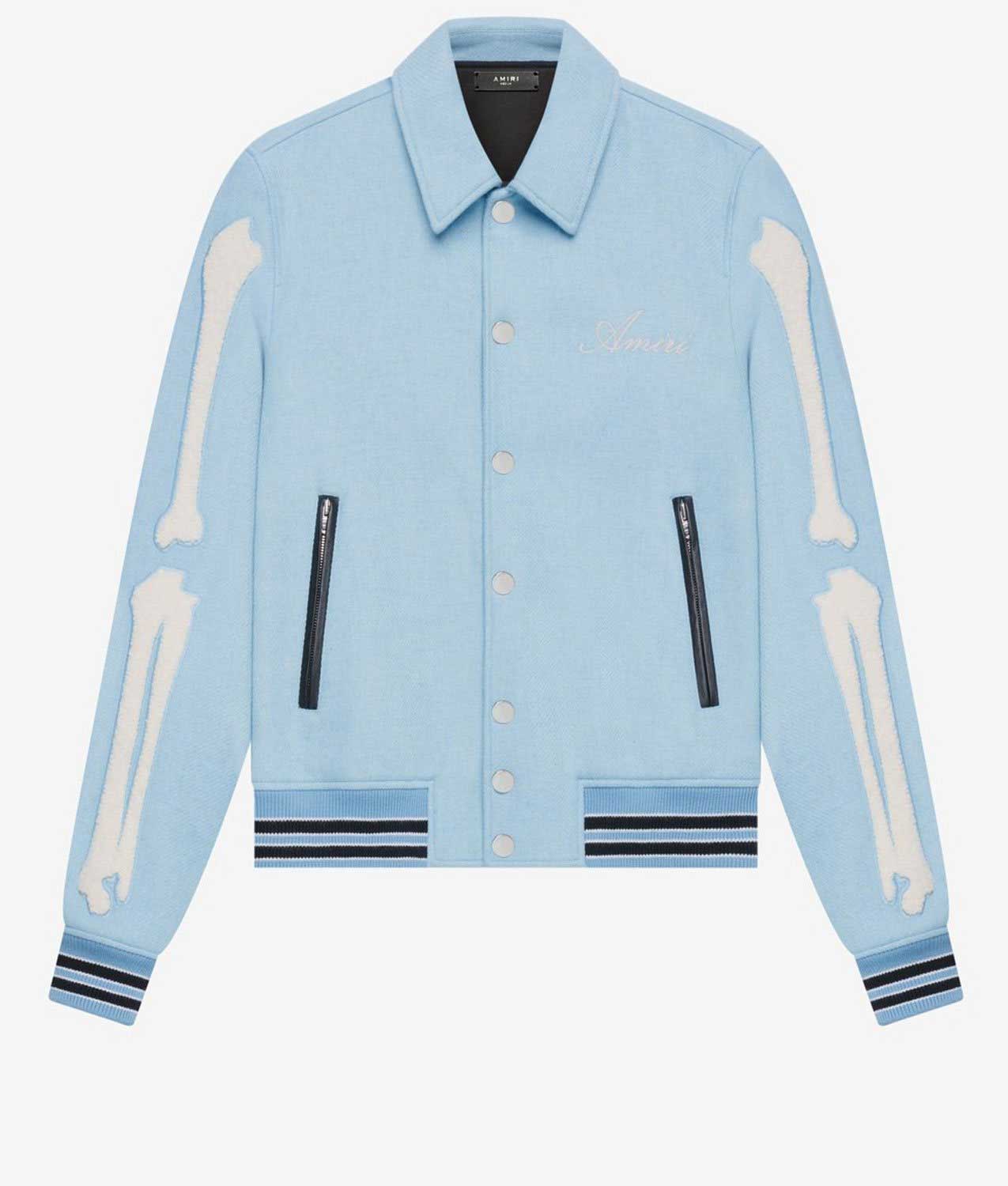
    The AMIRI name rests on hand-distressed denim, though it is in outerwear that the craft finally meets real tailoring. Mike Amiri founded the house in Los Angeles, and the same repair-then-rebuild thinking runs through the jackets exactly as it does through the jeans. Shopping for an amiri jacket means comparing construction philosophies rather than price tags. This house displays the work that mainstream luxury hides, putting hand-cut appliqué, contrast panels and visible repair on the outside of the garment. This rundown covers varsity, leather, denim outerwear, track layers and heavy shirting. Every figure quoted is an observed market listing from 2026, not an official price list.

    The bomber problem, and why MA-1 is not a jacket here

    No corner of the range is garbled by search results faster than this one. MA-1 is the generic United States military designation for a flight bomber, and dozens of brands use it as a product name. Within AMIRI’s own catalogue, MA-1 is a sneaker, seen at $799 in 2026 listings. Those two letters are the founder’s initials, which is why the line carries MA Bar, MA Core, MA Quad, MA Fit and MA Skyline. Bombers do appear in collections, and the bone motif has been described running along bomber sleeves in womenswear copy, but not one flagship bomber model is documented. Treat a listing offering an AMIRI MA-1 bomber as a warning about the seller rather than a find.

    The varsity jacket, the range’s most recognisable layer

    From across a room, varsity is what makes the brand obvious. A wool body, contrast leather sleeves, chenille appliqué and welt zip pockets make up the Varsity Patch Jacket. It has been observed near $2,310 at an authorised retailer, with in-season sale pricing around $1,155. The view collection Staggered Varsity Jacket runs the same idea heavier, in substantial wool with pebbled leather sleeves. A plainly named AMIRI Varsity Jacket also circulates, and sellers swap the three names around although the garments are different. Patchwork that is applied rather than printed is what supports the price band, which is why it is the first detail to photograph when buying secondhand.

    Leather, panelled rather than unbroken

    AMIRI leather follows the house habit of breaking a surface apart and then rejoining it visibly. Contrast leather piping, side pockets and a double-zip closure describe the AMIRI Sport Leather Jacket, the documented example of that panelled construction. Because it traces the seams rather than hiding them, the piping is the detail to read first. Leather also ties the outerwear to the denim, because the MX1 jean is repaired with pleated ovine leather set into its distressed areas. Because observed pricing for leather outerwear was not captured cleanly enough to give a benchmark, any figure is best read as a single listing. Composition lines matter here, because the house specifies materials precisely and vague leather wording is a warning sign.

    Denim outerwear, where the label is strongest

    Repair is the governing verb across the label, so that makes denim jackets its most on-brand layer. Observed near $1,880 and marked down to roughly $846, the Denim Repair Work Jacket says as much about the discount cycle as it does about the garment. Around $1,815 buys the Studs Flames Studded Trucker, and Lea Bones Denim Blouson, which carries the skeleton motif, has been seen near $1,399. MX2 is a genuine model name, and an MX2 Bandana Patch Denim Trucker exists, yet its collection pages returned no live products during 2026 checks. Treat MX2 pieces as archive-leaning, however abundant they look at off-price and resale. Bandana is a treatment applied across models, and not a fit name at all.

    Lighter layers: track jackets and flannel

    Not every AMIRI layer is a showpiece in wool or leather. The AMIRI Track Jacket has appeared in black and alabaster, with an elastic waistband and full zip closure. Observed near $1,635 and seen on sale around $1,308, the Sport Denim Track Jacket sits across both ideas. Flannel is a founding pillar rather than a side note, since the brand’s own history cites grungy flannel shirting. The MA Quad Bleached Flannel has been observed at $1,290, over most jeans in the line, while the Bones Flannel Overshirt has been listed near $865. Worn open over a tee, either functions as a light jacket, which is why layering room matters.

    Observed 2026 outerwear listings

    The figures below are observed market listings recorded in 2026 rather than an official price list. The gap between two channels that behave differently is the most useful thing to understand before buying. Full price on the brand’s own site generally holds through a season, while multi-brand retailers discount often and in plain sight. These sale figures record prices actually seen, not forecasts of what you will find today. Any claim that this label never discounts is wrong: markdowns of forty to seventy percent are structural. The list column is best read as a ceiling, the sale column as evidence that patience pays.

    Style Category Observed list price Sale price observed
    Varsity Patch Jacket Leather sleeves on a wool body $2,310 $1,155
    Denim Repair Work Jacket Denim outer layer $1,880 $846
    Studs Flames Studded Trucker Denim trucker layer $1,815 Not captured
    Sport Denim Track Jacket Track, in denim $1,635 $1,308
    Lea Bones Denim Blouson Outerwear cut in denim $1,399 Not recorded
    MA Quad Bleached Flannel Heavyweight shirting $1,290 Not captured
    Bones Flannel Overshirt Overshirt $865 No figure captured

    Sizing, with the caveats attached

    The brand does not publish complete garment measurements, so this section is buyer-reported rather than official. Fit guides describe the ready-to-wear slightly small and trim, and the common advice is one size up. Styles carrying Oversized in the name are already cut generously, and so sizing up compounds the effect instead of correcting it. Descriptors vary by product, and the MA Core Logo Hoodie is explicitly called a normal fit on its official page. That inconsistency is the argument for reading each product page rather than applying one rule to the label. Outerwear depends on what goes underneath, because a varsity over a hoodie needs different room than a leather jacket over a tee.

    Country of origin, style by style

    The claim that everything with this label is made in Los Angeles is widely repeated and false. Verified origins differ by style, and the pattern is worth learning. The MX1 and Stack jeans and the MA Core Logo Hoodie are made in the USA, while the MA Bar Logo Tee is specifically made in Los Angeles. The MA Core Logo Tee is made in Italy, and both the Skel Top Low and the Skel Court Hi are made in Vietnam. Because individual outerwear origins were not documented consistently, the label inside the garment has the last word. Country of origin is one of the sharpest authentication checks available, and a seller who will not photograph the interior labels is asking you to skip it.

    Buying without guesswork

    There is exactly one official online channel for this brand: AMIRI’s own store. The brand’s published stockists page lists everything else that legitimately sells amiri clothing. Anyone trying to buy amiri online should treat a shop absent from that list as one that has to earn trust another way. A July 2021 federal court complaint records AMIRI stating that it does not have an AMIRI outlet store and has never authorised any person or business to operate one, meaning any site branding itself an outlet is misrepresenting itself. Sitewide discounts of fifty to eighty percent on current-season stock are not something an authorised channel does, while off-price arms of legitimate groups do sell genuine past-season pieces. The brand verifies only products bought through its own channels or an authorised stockist, which is reason enough to keep the invoice.

    Where to start

    If this is a first purchase and the goal is something recognisably AMIRI, the varsity is the loudest option and the flannel the quietest. The middle ground is denim outerwear, the most coherent choice for anyone who already owns core denim. The lowest-commitment entry point is the track jacket, which is also the easiest to wear somewhere that is not cold. Leather should last longest in principle, though panelled construction means repairs are more involved than on a plain jacket. Search interest in amiri men skews toward outerwear and denim, which fairly reflects where the label’s identity sits. Heavily worked pieces usually hold value better than plain logo items, although that is an observed pattern rather than a rule, and none of this is investment advice.

    • Varsity Patch and Staggered Varsity are different jackets, so confirm the exact style name.
    • Ask for photographs of the interior labels and check the origin against the style.
    • Hold the appliqué stitching up against official product photography.
    • Treat any outlet claim as reason enough to walk, not a bargain.
    • Check the return period before committing to an untried size.
    • Bleached and treated pieces carry real restrictions, so read the care label.
  • My Drama Reels Basics Fan Favorite Series

    The Basics

    Every short drama app uses the same simple model. Bite-size vertical episodes are what you watch. You get the first few for free. Beyond those, episodes cost coins or a pass. Most confusion traces back to that split. Start with the five answers below.

    What is a short drama app?

    It delivers vertical video that is built for phones. Many bite-size episodes make up each series. ReelShort, DramaBox, ShortMax and My Drama are the leading apps. Plots tend to https://mydrama.org/ favor billionaires, revenge and hidden-identity reveals. Werewolf romances also enjoy broad popularity. The format started in China as duanju.

    What is the length of each episode?

    Most run one to two minutes. 60 to 100 seconds is a common target for Western shoots. A series usually runs to 20 to 100 episodes. For Married at First Sight, ReelShort lists 90. Double Life, a ReelShort hit, lists 60. A complete series can be as long as a movie.

    Why do episodes cut off at cliffhangers?

    That is usually where free episodes end. The first 5 to 15 are usually free, ReelShort says. Reports from the industry cite 8 to 10. The paywall tends to land at peak suspense. That timing is essentially the business model. It is also one of the top viewer complaint.

    Who are the owners of ReelShort, DramaBox and My Drama?

    Crazy Maple Studio in Sunnyvale, California owns ReelShort. That studio is supported by China’s COL Group. DramaBox is run by Singapore’s StoryMatrix, a part of Beijing Dianzhong Technology. Holywater is behind My Drama and was set up in Kyiv in 2020. Fox Entertainment picked up an equity stake in October 2025. ReelShort launched in 2022, DramaBox in 2023.

    Can I watch on a browser or a TV?

    Yes, but with limits. There is an Apple TV app for My Drama. We could find no verified ReelShort TV app. On ReelShort’s website, you can log in with Google, Facebook, Apple, TikTok or email. Progress stays in sync with the app. You can get free unlocks only in the app.

    Costs

    The most frequent questions are about money. The figures show US App Store prices as of September 2026. Country, platform and promotion all affect them. Take every number as approximate. Always start by looking at the pricing screen. This is what listings show.

    Is ReelShort free?

    Partly, and the free part is genuinely free. What people searching “is reel short free” or “is reel short app free” want is the catch. There is no charge for the download. Opening episodes are free. Later ones require coins or a VIP pass. Ads and check-ins earn free coins.

    How does the coin system work?

    The currency that unlocks episodes is coins. ReelShort’s blog sets an episode at roughly 60 coins. Its smallest pack offers 500 coins for roughly $4.99. Bigger packs come with bonus coins. Two episodes unlock after one rewarded ad. You earn 100+ coins from a 7-day check-in streak.

    Do the coins expire?

    The answer depends on the app. ReelShort says free reward coins usually expire. Coins you bought do not. My Drama handles this differently. Its terms say coins are forfeited after 12 months of inactivity. Spend reward coins first and keep active.

    What is the price of a weekly pass?

    The usual US price is about $19.99 a week. You will see it listed by ReelShort, ShortMax, DramaWave, GoodShort and My Drama. Cheaper tiers appear in some apps. ShortMax lists $9.99, while GoodShort starts near $5.99. These passes all renew on their own. Four forgotten weeks cost four times as much.

    Are there monthly or yearly plans?

    They exist on some apps. According to ReelShort’s blog, a yearly plan costs roughly $199.99. The monthly price differs from page to page. So we treat that figure as unconfirmed. DramaWave lists a monthly price of about $36.99. Only weekly passes show up for ShortMax in the US.

    Is it possible to watch without paying?

    Yes, if you are patient. Start with each series’ free opening episodes. Use rewarded ads to unlock more. Keep up a daily check-in streak. There are also official ReelShort channels on YouTube, TikTok and Dailymotion. Using all four together goes furthest.

    Managing and Cancelling Subscriptions

    A weekly pass renews until you stop it. Many people do not expect that. Once you know where, cancelling is quick. How you paid decides the place. Stores cancel store purchases. Each company handles purchases made on its website.

    Does deleting the app cancel my subscription?

    No, and this mistake is common. Apple says removing an app does not cancel its subscription. Google makes the same point about uninstalling. My Drama’s terms include the same warning. The pass keeps renewing until you cancel. First cancel, then delete.

    How do I cancel on an iPhone?

    Open the Settings app to begin. Next, tap your name at the top. Then go to Subscriptions. Select the short drama app. Tap Cancel and confirm your choice. To stay safe, act a day before renewal.

    How do I cancel a subscription on Android?

    Open the Google Play Store app. Find your Subscriptions list. Select the short drama app there. Tap Cancel and follow the steps shown. Remember, uninstalling does not cancel anything. Look at the list again to confirm the change.

    Can I cancel within the app?

    Sometimes, but the store route is safer. An in-app option under About Subscription is mentioned in ShortMax’s terms. For store buyers, they point to App Store or Google Play. Apple and Google only control what they charged for. Website buyers should get in touch with the company. Keep a screenshot of every cancellation.

    Why was I billed after a free trial?

    The wording of trials can confuse. ShortMax’s developer acknowledges its “free trial” and “24 hours free” labels confused people. According to its terms, passes renew 24 hours before expiry. The renewal comes at the same price. Cancel one day before any trial ends. Then confirm the store shows it cancelled.

    Refunds and Money Back

    The refund route depends on who took your money. App Store charges are handled by Apple. Google takes care of Play charges. The companies handle their own website charges. None of these routes guarantees a refund. This table lays out every path.

    Where you paid Cancelling Refund path Watch out for
    iPhone (App Store) Settings, your name, Subscriptions, Cancel Apple’s Report a Problem page Deleting the app does not cancel
    Android (Google Play) Google Play, Subscriptions, Cancel Google within 48 hours, and after that the developer Uninstalling does not cancel
    Website The app company’s account page or support The app company alone Often non-refundable, as My Drama’s terms state

    How can I get an Apple refund?

    Begin on Apple’s Report a Problem page. Log in using the Apple ID that paid. Pick the charge and explain in a few words. A reply from Apple usually comes within 24 to 48 hours. It is Apple that decides, not the app developer. Also cancel the pass, or it renews.

    How does a Google Play refund work?

    Timing is the biggest factor here. Within 48 hours of purchase, Google says you may get a refund. Go directly through Google Play to request it. Contact the developer after that window. ReelShort tells users to go to Profile, then Feedback. Move fast if a renewal catches you by surprise.

    What about buying on the website?

    Those are handled by the app company. Apple and Google cannot help in that case. Web purchases are non-refundable except where law requires, according to My Drama’s terms. Its terms offer a 14-day withdrawal right to EU and UK users. Other companies set their own rules. Before paying online, read the terms.

    Can unused coins be refunded?

    Usually not, and the terms say so. Under My Drama’s terms, coin purchases are final. ShortMax turns down refunds unless its own fault makes a product unusable. With accidental purchases, a store request may help. Buy the smallest pack until a series hooks you. That way, mistakes cost less.

    Look-Alike Apps and Safety

    Name mix-ups are everywhere here. A misspelling can lead to minor unrelated apps. Some sites imitate well-known brands. A few downloads are unsafe. Real names protect your money. The answers below sort real from fake.

    Is Real Short a real app?

    No, not as far as we could find. ReelShort is the correct spelling, and Real Short is a misspelling of it. The same goes for “real short app”, “realshot”, “reel shot” and probably “shot shorts” too. The real name is one word. The seller shown on the App Store is New Leaf Publishing. Make sure of that before downloading.

    What are the ReelBox, DailyShort and GoldShort TV apps?

    These are small, unrelated apps. Found via “reel box” or “reelbox tv”, ReelBox has 50K+ Android installs. It has nothing to do with ReelShort or DramaBox. DailyShort, often typed “daily short”, shows 100K+ installs. GoldShort TV, an Android TV app, has 10K+ installs. Most people searching probably mean GoodShort.

    Is ShortTV the same as ShortMax?

    Very likely, though unconfirmed. ShortMax’s legal entity is SHORTTV LIMITED in Hong Kong. Its website sends visitors on to ShortTV’s site. Each went live in September 2023. There is no official rename announcement that we found. A search for “short tv” or “short max” also brings up unrelated apps.

    Are mod APKs and coin generators safe to use?

    No, and none are official. Mod APKs are modified app copies from outside official stores. One DramaBox look-alike labels its download as an unofficial modified version. Coin generators are not official either. There is no way for you to verify what they do. Use official stores and websites only.

    Why is ReelShort’s Trustpilot rating low?

    On Trustpilot, ReelShort’s page shows 1.3 out of 5 from 250 reviews. Being charged after cancelling is a common complaint. Weekly auto-renewals are often mentioned. Others bring up coin prices and refused refunds. Any review site reflects people who chose to post. Read it as a checklist rather than a verdict.

  • Valentino Iconic Edit Valentino Raffia Tote

    Your Debut Valentino Garavani Bag: Making the Call

    Buying a first Valentino bag turns on more variables than the number on the tag implies. Fifteen in-production lines are on the table, and they stretch from a $650 VLogo Signature clutch to a $7,900 embroidered Panthea and from raffia to ostrich. Choosing well is less about locating the best bag than about narrowing honestly: what you carry, how often you carry it, and how loud you want the result to be. Two points blindside newcomers and are worth absorbing first: why the bags read GARAVANI, and what the resale market genuinely returns. This piece runs the decision in the order that works, which is use first and motif last. Every figure here is an observed 2026 market price seen on the brand’s own US site, not an official price list.

    Start With What You Carry, Not What You Want

    The bag you already use is the place to start, well before you look at anything new. Comfortably the deepest current category, Valentino shoulder bags run from DeVain at $2,100 to $3,900, through Rockstud Spike at $2,550 to $3,700 and Locò at $2,700 to $5,900, up to Panthea at $3,800 to $7,900. Totes occupy the approachable end: the Rockstud Mini Shopping at $1,390 to $1,850, the VLogo Signature Shopping bags at $2,650 to $3,750 and the Jean Medium Shopping bag at $3,650. If you want a Valentino crossbody bag, the small Rockstud crossbody sits at $1,650 to $1,950, a Rockstud Spike crossbody clutch at $2,400 and a Rockstud chain wallet at $1,250. A quirk worth knowing: the brand’s own US site lists bags under Shoulder Bags, Totes, Top Handle Bags, Clutches, Wallets and Small valentino rockstud tote Leather Goods, with no crossbody category page at all. Because crossbody acts as a descriptor rather than a section, going by style name is quicker, or find a retailer that maintains one.

    Choose a Band Rather Than a Number

    Set one number and it tends to drift upward; work to a band instead. Even with a seasonal Valentino bag sale trimming the sticker, bands stay the honest way to plan. Roughly $650 to $1,500 is the entry band, containing VLogo Signature clutches at $650 to $790, Rockstud wallets at $1,250, the Rockstud mini shopping bag at $1,390 to $1,490 and the VLogo mini bucket at $1,450. The centre of gravity is the middle band at $1,650 to $3,600, where most of Rockstud, Rockstud Spike, Locò, VSling and the VLogo shopping bags live. The top band, $3,700 to $7,900, is embroidery, crystal and pearl work and exotics: python at $5,650, a VSling with pearls at $6,550, ostrich at $7,600 and an embroidered Panthea at $7,900. For a first purchase, the most persuasive arguments live in the middle band, because that is where the full-size, everyday-capable versions of the recognisable styles are found. Still, the entry band is no compromise: a $1,390 mini shopping bag is a real Valentino tote bag in the same materials as its dearer siblings.

    A Shortlist to Work From

    What follows is a starting shortlist rather than a ranking, gathered from styles that are currently live and priced where a first buyer tends to look. Each row pairs an intention with a specific bag and the observed price for its cheapest material. Nothing here is exotic, embroidered or crystal-set, because a first bag should be one you use rather than one you protect. Each price is the entry point for that style; the same silhouette goes higher in laminated calfskin, nappa or pony-effect. Treat the final column as the pragmatic case for the bag rather than a verdict on style. If two rows appeal equally, choose the one whose shape matches the bag you already reach for on a normal weekday.

    If you are after Style Price seen Why it suits a first buyer
    The lowest real entry VLogo Signature clutch in grainy calfskin $650 to $790 House codes and materials at the lowest outlay
    A tote you carry daily Rockstud Mini Shopping, grainy calfskin $1,390 The most recognisable motif at the accessible end
    To keep your hands free all day Rockstud small crossbody $1,650 to $1,950 Works hardest of any shape; resale history is strong
    Formality and structure Rockstud small shoulder, grainy calfskin $2,100 Keeps its shape and works from office to evening
    Softness over structure Rockstud Spike small, suede $2,550 Quilting and a matte surface, not hard edges
    A logo in place of studs VLogo Signature shopping bag $2,650 to $3,750 Softer branding that still carries properly
    A piece that makes a statement Locò, calfskin small $2,700 to $2,950 Sharp silhouette; strong flap-bag retention

    How Much Should It Announce Itself?

    How much a bag announces itself comes down to motif, and here taste finally gets a say. Rockstud is the signature, its pyramid studs introduced in Fall 2010 by then co-creative directors Maria Grazia Chiuri and Pierpaolo Piccioli, first on footwear, with the inspiration cited as the bugnato rustication of Roman architecture. In Rockstud Spike the idea is softened, becoming quilting with maxi studs that reads less severe in the hand. The quiet option is VLogo Signature, where the contemporary V emblem acts as hardware and closure across clutches, buckets, bowling bags and shopping bags. Where VSling builds the V into a sculptural metal handle and closure, Locò is the sharp, small, evening-capable flap. Panthea and DeVain sit further from the obvious signatures and reward buyers who want the house without the shorthand.

    Pick a Material Your Week Won’t Ruin

    Material decides whether the bag ages well or merely survives. Grainy calfskin wins by default first time out, since it holds shape, resists scuffing and hides fingerprints, and it is also the cheapest rung in most lines. Suede is priced almost level with it and sometimes below, but demands a brush, a protector spray and real avoidance of rain and oils. Softer, and dearer, nappa runs roughly ten percent more at small sizes and burnishes at the corners over time. Laminated, metallic and pony-effect finishes command premiums of about a quarter to a third, and they fail at the finish rather than the leather, which is why crowded storage punishes them. Exotics and heavy decoration are wonderful and entirely wrong for a first bag, since they need professional care and turn every outing into a calculation.

    Current Line, or Archive?

    More often than not, a first bag is better bought current, but the archive is worth understanding before you shop. Roman Stud is transitional: a small denim Handle Bag was observed at $3,550 though flagged as a reserved product rather than orderable, so the line now reads as drifting toward resale. One Stud has left the current filters, with a large nappa tote seen at $1,695 through a third-party retailer rather than officially. A resale platform reports the VLogo Escape tote discontinued; Supervee is resale only, with a pre-owned VLogo Supervee shoulder bag observed around $866; and the Garavani Stud Sign is clearing rather than current. Resale commentary treats Candystud a classic and raises it constantly, but it is not verified as a current line. Buy archive when you want a specific shape and are comfortable with authentication, and buy current when you want a warranty conversation, a dust bag and a return window.

    What Resale Really Returns

    No shortage of coverage claims Valentino bags hold eighty percent of their value; that figure does not survive contact with the data. Roughly 41 percent retention overall is what verified resale figures show for Valentino handbags, and the strongest individual styles land between 50 and 58 percent. The recorded figures are 58 percent for the Roman Stud Flap, 57 percent for the VLogo Locò Flap Shoulder, 56 percent for the Rockstud Drawstring Bucket and Rockstud Flip Lock Flap, and 50 percent for the Rockstud Pouch Crossbody. Call it mid-tier retention, well below the strongest houses and well above nothing; the pattern is consistent, in that the instantly recognisable motif bags resell best. A bag is not an asset class, and none of this is investment advice. It is simply a useful reason to favour a signature silhouette in a durable material for a first purchase.

    Before You Buy: The Name on the Label

    There is one last check, and it trumps everything else here. The luxury house’s bags read VALENTINO GARAVANI, and that second word is a contractual obligation stemming from a 1979 coexistence agreement with Mario Valentino S.p.A., a separate and unrelated Naples company founded in 1952. Bags branded “Valentino by Mario Valentino” turn up at off-price retailers including Nordstrom Rack, Saks OFF 5TH and TJ Maxx; they are authentic products of that other company, not discounted Garavani. Buy direct from the house, or from verified stockists such as Neiman Marcus, Bergdorf Goodman, Saks Fifth Avenue, Nordstrom, Mytheresa, Net-a-Porter, Farfetch, Selfridges, Harrods, Giglio and Tessabit. Know too that there is no date-code system here, only a serial number on an interior tag that not every bag carries, so any seller promising to decode a date code is improvising. With those two facts settled, the rest of the decision is just taste.