الكاتب: opal598

  • Coach Shoulder Bags Buyer Guide Honest Review Inside

    Coach Shoes: Loafers, Sneakers and Boots

    Beyond the coach handbags it is chiefly known for, Coach also offers footwear, running from logo sneakers to loafers, clogs and even a pointed bootie. To make clear what each name actually refers to, this buyer’s rundown sorts the range by category. The first priority is getting model names right, since the names stir up more confusion in shoes than in any other part of the catalogue. The second job, equally important, is being clear about what could and could not be confirmed. All prices shown here are observed or reported market prices rather than an official Coach price list, and they shift with material, colour and promotions. Availability also varies from season to season, so a style you see today might have disappeared by next quarter. This page serves as a guide of the range instead of a guarantee of stock.

    Sneakers: Names Worth Checking

    Within the shoe range, sneakers make up the biggest and most confusing part. A number of styles share a word with other Coach products, while resale listings frequently trim names until they point at the wrong item. Cutting the Clip Court Sneaker down to a single word is one frequent slip, as that single word is not the name of the shoe. Citysole is sometimes listed as a model, but it is really the name of a comfort sole. A third muddle surrounds the Soho Sneaker: it is a separate product from the Soho Bag 25 and from the Soho Flap bag released in 2006. Lastly, note that availability varies by season: whether the C201, C203, coschclothing.com Clip Court and Citysole styles are stocked this season could not be confirmed. To steer clear of buying the wrong pair, check the full product name on each listing, since nothing is simpler.

    The C201 and the C203

    The C201 Sneaker is built as a court-style low-top sneaker. Shoppers can pick between an obvious logo and a more subtle finish, since it has been reported in Signature canvas, Signature jacquard and leather versions. The C203 Sneaker heads in a different direction with a retro, skate-inspired profile. It has been reported in Signature denim, leather and suede versions. Whether each is still in current production could not be confirmed, although both names have appeared in Coach listings and at shoe retailers. If you find either one, examine the colour name and listing details carefully, since older and newer stock can appear together. Shoppers who want the logo look should compare canvas and leather pairs in person if they can.

    Clip Court Sneakers and Citysole

    Reported sightings put the Clip Court Sneaker in low-top and high-top variants, among them camo and Signature canvas versions. Always search the full name, Clip Court, because shortened names can bring up unrelated products. Importantly, Citysole is not a shoe model in any sense. It is the name of a Coach comfort sole, and it features on court sneakers such as the Citysole Court Sneaker and its high-top variant. Via Coach (Re)Loved, the brand’s own resale and repair programme, restored pairs of those sneakers have reportedly been offered. Insist on the full product name and a clear photo of the sole whenever a seller lists a pair only as a Citysole. Those two details make it simpler to match the pair against official product listings.

    Soho Sneaker and Skate Sneaker

    The Soho Sneaker is a newer style that Coach showcased in its own editorial and included in a Spring 2026 round-up. Keep it distinct from the Soho Bag 25, a smaller handbag reissue, and from the original Soho Flap bag of 2006. Across resale sites, add the word sneaker to your search so that bag listings do not crowd the results. The Skate Sneaker is the style most clearly connected to the current season. A laceless style presented in low-top and high-top versions, it was seen at the Fall 2026 runway show in New York. The materials named for that launch were suede and canvas, and no reliable price for either sneaker was captured. Instead of trusting a price quoted in a blog post, compare live listings.

    Loafers, Sandals and Clogs

    Published coverage of the Fall 2026 range reported around ten new non-sneaker styles priced from $155 to $295. Those figures originate in a shopping article summed up by a secondary source, so regard them as reported rather than confirmed. At a reported $195, the Leah Loafer sits near the middle of that band. The Archival Buckle Clog came in at $155, the lowest reported price. Sandals in the same report featured the Bow Kitten Heel Sandal at $159, the Margot Flat Sandal at $165 and the Margot Slingback In Loved Leather at $195. Not one of those shoe prices gets as high as the $350 observed for the Kisslock Frame Bag, itself an entry point into full-price Coach bags. Because colour, stock and promotions can still shift prices, confirm the live listing before you decide.

    Boots and Booties Explained

    Boots are the weakest part of the information available on Coach shoes. At $295, the top of that reported range, the Pointed Toe Bootie is the one boot style mentioned in the reported Fall 2026 prices. This breakdown lists no other boots, since no other boot names or prices could be confirmed. A boot listed as current could belong to an earlier season, which is why that gap matters. Check with the seller before paying whenever a boot listing gives no style name or season. Because the Fall 2026 show led with varsity jackets, peacoats and shearling coats, buyers after a full winter look may find more in coach clothing. A bootie can work with that outerwear, but check the style is in stock before planning an outfit around it.

    Reported Prices in Brief

    Together in one place, the table gathers the names above. Since no reliable figures were found, sneaker prices are shown as not captured. For the loafer, clog, sandal and bootie, the prices are the reported Fall 2026 figures described earlier. None of these numbers is an official Coach price list. The availability notes cover what was reported rather than what is in stock near you. Use the table as a checklist of accurate names whenever you search. Any new price or season in a listing is a cue to update your own notes.

    Style name Category Price status Note on availability
    C201 Sneaker Low top with a court feel Price not captured Availability varies by season
    C203 Sneaker Retro sneaker with a skate shape Price not captured Availability varies by season
    Clip Court Sneaker High top and low top Price not captured Varies from season to season
    Citysole Court Sneaker Court sneaker on the Citysole sole No price captured Varies from season to season
    Soho Sneaker A sneaker, not a Soho bag Not captured Included in a Spring 2026 edit
    Skate Sneaker Low and high tops without laces Not captured Fall 2026 runway show
    Leah Loafer Loafer style Reported at $195 In the Fall 2026 range
    Archival Buckle Clog Clog Reported at $155 Fall 2026 range
    Pointed Toe Bootie Bootie design $295 reported From the Fall 2026 range

    Where to Buy and When to Hunt for Deals

    Going by Coach, authentic goods can be found at its own stores, its official website, Coach Outlet and authorised department or specialty stores. Since Coach Outlet is Coach’s own official channel, pairs bought there are genuine Coach. Outlet assortments have been reported to include archived and previous-season styles, which is where older sneaker names may resurface. Shoppers waiting for a coach bag sale should be aware that markdowns seen on the full-price site covered selected styles only, with no fixed dates. Members of Coach Insider, the free loyalty programme covering Coach and the coach outlet channel, reportedly get early access to sales. Ads for outlet sites promising 70 to 90 percent off everything should raise suspicion, as they match the reported scam pattern. In the UK, Coach’s support pages describe returns within 30 days of delivery, which is worth a look before ordering shoes online.
    • Always search the full model name, never a shortened version.
    • On older sneaker listings, check the season or the style name.
    • Only use Coach stores, Coach Outlet or authorised retailers.

    Buyer’s Verdict

    Coach shoes make the most sense for buyers who want a recognisable logo sneaker or a mid-priced loafer from a brand they already know. If you carry a coach shoulder bag in Signature canvas, a sneaker in Signature canvas gives an easy matching look. The leather versions or the Fall 2026 loafers and clogs may suit buyers who prefer more understated pieces. The wrong listing or a mismatched pair often follows from a wrong model name, the most avoidable mistake for many shoppers. Citysole is a sole, while the Soho Sneaker is not to be confused with any Soho coach bag. Judge fit and comfort in person where you can, because this guide is a buyer’s overview rather than a full coach review. To end up with a pair you will actually wear, go in with correct names and realistic expectations.

  • DeepNude AI Apps Analysis Upgrade on Demand

    Prevention Strategies Against NSFW Manipulations: 10 Steps to Bulletproof Personal Privacy

    NSFW deepfakes, “Machine Learning undress” outputs, plus clothing removal applications exploit public photos and weak privacy habits. You can materially reduce individual risk with an tight set containing habits, a ready-made response plan, plus ongoing monitoring that catches leaks quickly.

    This guide presents a practical 10-step firewall, explains the risk landscape around “AI-powered” adult AI tools and clothing removal apps, and gives you actionable strategies to harden your profiles, images, alongside responses without unnecessary content.

    Who experiences the highest risk and why?

    People with a large public photo exposure and predictable routines are targeted since their images are easy to collect and match to identity. Students, content makers, journalists, service workers, and anyone in a breakup or harassment situation face elevated risk.

    Minors and young individuals are at particular risk because contacts share and tag constantly, and abusers use “online adult generator” gimmicks when intimidate. Public-facing jobs, online dating accounts, and “virtual” community membership add vulnerability via reposts. Targeted abuse means many women, including a girlfriend or partner of a well-known person, get attacked in retaliation or for coercion. That common thread stays simple: available photos plus weak protection equals attack surface.

    How can NSFW deepfakes really work?

    Modern generators employ diffusion or GAN models trained on large image sets to predict realistic anatomy under clothes and synthesize “realistic nude” textures. Older projects like DeepNude were crude; current “AI-powered” undress tool branding masks a similar pipeline having better pose management and cleaner images.

    These applications don’t “reveal” individual body; they produce a convincing forgery conditioned on personal face, pose, and lighting. When one “Clothing Removal Tool” or “AI undress” Generator is fed your images, the output can look believable enough to fool ordinary viewers. Attackers merge this with doxxed data, stolen direct messages, or reposted images to increase intimidation and reach. That mix https://nudiva.eu.com of realism and distribution velocity is why defense and fast response matter.

    The 10-step protection firewall

    You cannot control every redistribution, but you are able to shrink your exposure surface, add obstacles for scrapers, plus rehearse a quick takedown workflow. Consider the steps below as a multi-level defense; each layer buys time plus reduces the chance your images wind up in an “NSFW Generator.”

    The steps build from protection to detection into incident response, plus they’re designed when be realistic—no perfection required. Work through them in progression, then put scheduled reminders on the recurring ones.

    Step 1 — Lock in your image exposure area

    Limit the source material attackers can feed into an undress app by curating where individual face appears and how many detailed images are public. Start by converting personal accounts to private, pruning open albums, and deleting old posts which show full-body poses in consistent brightness.

    Ask friends to limit audience settings regarding tagged photos and to remove your tag when anyone request it. Review profile and banner images; these are usually always visible even on restricted accounts, so choose non-face shots and distant angles. When you host one personal site plus portfolio, lower resolution and add appropriate watermarks on photo pages. Every removed or degraded input reduces the quality and believability regarding a future manipulation.

    Step Two — Make individual social graph harder to scrape

    Harassers scrape followers, connections, and relationship status to target you or your group. Hide friend collections and follower counts where possible, alongside disable public access of relationship information.

    Turn away public tagging and require tag approval before a content appears on individual profile. Lock down “People You Could Know” and friend syncing across social apps to eliminate unintended network exposure. Keep direct messages restricted to friends, and avoid “public DMs” unless you run a separate work profile. Should you must preserve a public presence, separate it apart from a private account and use different photos and handles to reduce connection.

    Step Three — Strip metadata and poison crawlers

    Remove EXIF (location, equipment ID) from pictures before sharing when make targeting alongside stalking harder. Most platforms strip metadata on upload, yet not all messaging apps and remote drives do, so sanitize before transmitting.

    Disable camera location services and live picture features, which may leak location. When you manage a personal blog, insert a robots.txt alongside noindex tags for galleries to minimize bulk scraping. Evaluate adversarial “style masks” that add subtle perturbations designed when confuse face-recognition tools without visibly modifying the image; such methods are not ideal, but they add friction. For children’s photos, crop faces, blur features, plus use emojis—no alternatives.

    Step Four — Harden personal inboxes and private messages

    Many harassment operations start by baiting you into sending fresh photos and clicking “verification” connections. Lock your pages with strong login information and app-based 2FA, disable read notifications, and turn down message request glimpses so you do not get baited by shock images.

    Treat every request for selfies similar to a phishing scheme, even from accounts that look recognizable. Do not share ephemeral “private” pictures with strangers; screenshots and second-device captures are trivial. Should an unknown user claims to have a “nude” or “NSFW” image of you generated using an AI undress tool, do not negotiate—preserve evidence and move to personal playbook in Section 7. Keep a separate, locked-down email for recovery plus reporting to prevent doxxing spillover.

    Step 5 — Mark and sign individual images

    Visible or subtle watermarks deter basic re-use and help you prove origin. For creator or professional accounts, include C2PA Content Authentication (provenance metadata) for originals so sites and investigators are able to verify your posts later.

    Keep original documents and hashes within a safe repository so you are able to demonstrate what you did and did not publish. Use standard corner marks plus subtle canary text that makes modification obvious if anyone tries to eliminate it. These strategies won’t stop any determined adversary, however they improve takedown success and reduce disputes with sites.

    Step Six — Monitor personal name and identity proactively

    Quick detection shrinks distribution. Create alerts for your name, handle, and common alternatives, and periodically execute reverse image queries on your most-used profile photos.

    Search platforms and forums where adult AI tools alongside “online nude synthesis app” links circulate, but avoid engaging; you only need adequate to report. Consider a low-cost surveillance service or group watch group to flags reposts for you. Keep a simple spreadsheet concerning sightings with URLs, timestamps, and captures; you’ll use that for repeated eliminations. Set a regular monthly reminder to review privacy preferences and repeat those checks.

    Step 7 — Why should you respond in the opening 24 hours post a leak?

    Move fast: capture evidence, file platform reports via the correct guideline category, and control the narrative via trusted contacts. Don’t argue with attackers or demand deletions one-on-one; work using formal channels that can remove posts and penalize profiles.

    Take full-page images, copy URLs, and save post numbers and usernames. Submit reports under “non-consensual intimate imagery” or “synthetic/altered sexual content” so you access the right review queue. Ask a trusted friend to help triage while you preserve psychological bandwidth. Rotate login passwords, review associated apps, and strengthen privacy in when your DMs and cloud were furthermore targeted. If underage individuals are involved, contact your local cyber security unit immediately alongside addition to service reports.

    Step 8 — Evidence, escalate, and report legally

    Document everything in a dedicated folder thus you can progress cleanly. In multiple jurisdictions you can send copyright or privacy takedown requests because most synthetic nudes are derivative works of your original images, alongside many platforms honor such notices also for manipulated content.

    Where applicable, use GDPR/CCPA mechanisms for request removal concerning data, including scraped images and pages built on these. File police statements when there’s extortion, stalking, or minors; a case reference often accelerates site responses. Schools and workplaces typically maintain conduct policies covering deepfake harassment—escalate using those channels if relevant. If you can, consult a digital rights organization or local attorney aid for tailored guidance.

    Step 9 — Protect minors and partners in home

    Have a family policy: no posting kids’ faces publicly, no swimsuit images, and no transmitting of friends’ photos to any “nude generation app” as one joke. Teach teens how “AI-powered” adult AI tools work and why transmitting any image can be weaponized.

    Enable device passwords and disable online auto-backups for private albums. If one boyfriend, girlfriend, plus partner shares pictures with you, set on storage policies and immediate removal schedules. Use secure, end-to-end encrypted apps with disappearing content for intimate material and assume screenshots are always likely. Normalize reporting questionable links and profiles within your home so you detect threats early.

    Step 10 — Build workplace and educational defenses

    Institutions can minimize attacks by organizing before an emergency. Publish clear guidelines covering deepfake abuse, non-consensual images, and “NSFW” fakes, with sanctions and reporting paths.

    Create a central inbox for urgent takedown requests and a guide with platform-specific URLs for reporting artificial sexual content. Train moderators and youth leaders on detection signs—odd hands, warped jewelry, mismatched reflections—so incorrect positives don’t circulate. Maintain a catalog of local services: legal aid, mental health, and cybercrime connections. Run simulation exercises annually so staff know specifically what to do within the first hour.

    Threat landscape snapshot

    Multiple “AI nude creation” sites market quickness and realism during keeping ownership unclear and moderation limited. Claims like “our service auto-delete your uploads” or “no storage” often lack validation, and offshore infrastructure complicates recourse.

    Brands in that category—such as Naked AI, DrawNudes, UndressBaby, AI Nudes, Nudiva, and NSFW Creator—are typically marketed as entertainment however invite uploads of other people’s pictures. Disclaimers rarely halt misuse, and policy clarity varies between services. Treat every site that processes faces into “explicit images” as any data exposure and reputational risk. Your safest option remains to avoid engaging with them alongside to warn friends not to upload your photos.

    Which AI ‘undress’ tools pose the biggest security risk?

    The riskiest services are platforms with anonymous managers, ambiguous data keeping, and no clear process for flagging non-consensual content. Any tool that promotes uploading images showing someone else becomes a red flag regardless of generation quality.

    Look for transparent policies, known companies, and external audits, but recall that even “better” policies can shift overnight. Below exists a quick assessment framework you have the ability to use to assess any site inside this space minus needing insider knowledge. When in doubt, do not submit, and advise your network to execute the same. Such best prevention remains starving these applications of source material and social acceptance.

    Attribute Red flags you may see More secure indicators to look for Why it matters
    Company transparency Zero company name, absent address, domain anonymity, crypto-only payments Licensed company, team section, contact address, regulator info Unknown operators are challenging to hold responsible for misuse.
    Information retention Ambiguous “we may store uploads,” no removal timeline Clear “no logging,” deletion window, audit verification or attestations Retained images can breach, be reused during training, or distributed.
    Oversight Absent ban on external photos, no children policy, no report link Clear ban on non-consensual uploads, minors identification, report forms Missing rules invite misuse and slow eliminations.
    Legal domain Undisclosed or high-risk international hosting Identified jurisdiction with valid privacy laws Individual legal options depend on where the service operates.
    Source & watermarking Zero provenance, encourages distributing fake “nude pictures” Supports content credentials, identifies AI-generated outputs Labeling reduces confusion and speeds platform intervention.

    Five little-known details that improve personal odds

    Minor technical and policy realities can shift outcomes in personal favor. Use such information to fine-tune personal prevention and action.

    First, image metadata is often stripped by large social platforms during upload, but numerous messaging apps maintain metadata in attached files, so sanitize before sending rather than relying on platforms. Second, someone can frequently use copyright takedowns regarding manipulated images which were derived out of your original images, because they remain still derivative creations; platforms often honor these notices even while evaluating data protection claims. Third, the C2PA standard for content provenance becomes gaining adoption within creator tools alongside some platforms, and embedding credentials inside originals can enable you prove what you published when fakes circulate. Fourth, reverse image searching with a closely cropped face or distinctive accessory might reveal reposts to full-photo searches overlook. Fifth, many platforms have a dedicated policy category for “synthetic or manipulated sexual content”; picking proper right category while reporting speeds elimination dramatically.

    Final checklist you can copy

    Audit public photos, protect accounts you do not need public, and remove high-res whole-body shots that invite “AI undress” attacks. Strip metadata from anything you post, watermark what must stay public, plus separate public-facing profiles from private profiles with different handles and images.

    Set monthly alerts and reverse searches, and maintain a simple crisis folder template available for screenshots alongside URLs. Pre-save filing links for major platforms under “involuntary intimate imagery” and “synthetic sexual media,” and share personal playbook with one trusted friend. Set on household guidelines for minors plus partners: no sharing kids’ faces, no “undress app” pranks, and secure equipment with passcodes. If a leak takes place, execute: evidence, service reports, password changes, and legal advancement where needed—without communicating with harassers directly.

  • Righteous Shorts Outfit Ideas Real Wear Review

    Genuine Righteous Clothing: How Purchasers Can Identify the Genuine Article

    In 2026, trying to shop for streetwear means wading through a crowded landscape of copycats, resellers, and outright counterfeits. We Are Righteous has earned a reputation on deliberate design and no-nonsense construction, which unfortunately makes it a magnet for imitation. This checklist breaks down the concrete details that set apart a real Righteous piece from a fake, so you can shop confidently whether you’re buying your first hoodie or assembling a full wardrobe of righteous apparel.

    This has nothing to do with label elitism. What matters is protecting your money as well as making sure you get the item you actually spent money on. A counterfeit garment rarely keeps its form, tone, or seams past a handful of launderings, and it never carry the same substance — literally or figuratively — as something manufactured to genuine quality standards carries. Below, we break down what to verify beforehand and what to examine after delivery.

    Start Off From the Origin

    For genuine peace of mind you’re getting real righteous clothing, the surest approach is buying directly from We Are Righteous or from a retailer the brand has explicitly authorised. Third-party marketplaces are the riskiest route, not because every seller is dishonest, but because confirming authenticity becomes tougher once a product passes through several owners. Should a listing show no clear seller information, no returns process, and a price that seems too low against the brand’s standard price bracket, treat it as a warning sign rather than a lucky find.

    If you’re shopping for pre-owned items, review the seller’s background. Red flags point to a seller handling numerous items spanning unrelated brands, paired with vague photos and stock images used righteous zip up rather than real product shots — a frequent tell among counterfeit operations. Genuine sellers — private resellers of authentic pieces among them—will usually provide photos of the actual item, including tags, care labels, and stitching close-ups. Request them prior to finalizing the purchase if these are lacking.

    Another smart move is to check out a handful of trustworthy reviews. A we are righteous review from an independent source — not the brand’s own marketing — usually points to specific details like the weight of the fabric, notes on whether it fits true to size, or its post-wash performance that counterfeiters rarely bother replicating. If a righteous review consistently references the same design elements you’re seeing on the item you’re considering, that consistency is a comforting indicator of authentic inventory.

    Check Over the Physical Item

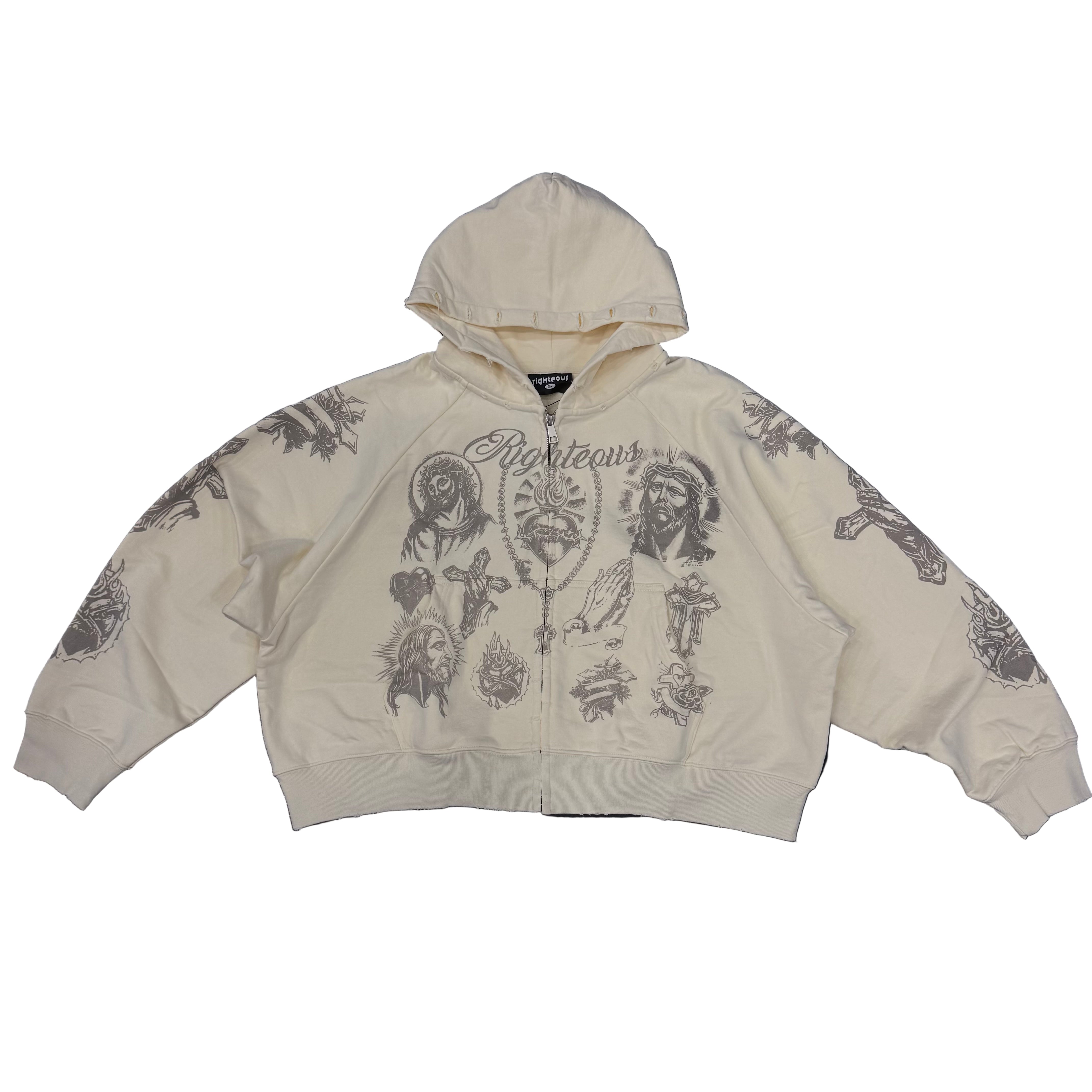
    After the item arrives and you can examine it, the cloth itself tells you the bulk of what you need to know. Genuine Righteous hoodies are typically made from substantial cotton fleece, typically in the 350-450 GSM range depending on the specific style. Anything noticeably thinner, flimsy, or see-through under normal light should raise suspicion, especially if it was sold as a premium-weight piece.

    The evenness of the stitching counts for more than most shoppers assume. Turn the garment inside out and look at the seams surrounding the cuffs, hem, and hood lining. Authentic manufacturing batches show consistent stitch size, reinforced stress points at the pouch pocket, and no loose threads trailing out of the inside seams. Counterfeit production often skimps on this step because uneven stitching is cheap and fast, while reliable seam quality requires better machinery and quality checks.

    Inspect the drawstring and metal components next. Authentic pieces use cord tips and eyelet fittings that match the rest of the garment’s finish — no clashing metal shades, no frayed cord tips, no plastic that feels brittle. Any zippers present ought to move smoothly and never catch, and every stitched logo should sit flush against the fabric without bunching.

    To finish, test the aroma and feel of the fabric. Authentic cotton fleece has a neutral, slightly earthy scent when new, while cheap counterfeit blends often carry a strong chemical smell from substandard dyes and synthetic additives. It’s a minor point, but experienced buyers use it routinely because it’s hard for counterfeiters to fake at scale.

    Study the Branding Details

    Logo work is where knockoffs typically fail, because replicating exact scale and alignment takes precision they usually don’t invest in. On genuine Righteous Clothing pieces, the stitched or printed logo text sits at a consistent size and position across a given style run — check listing images from the brand’s own site against your item if you’re uncertain.

    The boldness and spacing of the lettering are easy tells. A counterfeit logo often looks a bit squeezed, elongated, or unevenly spaced between letters, because it’s typically redrawn by hand instead of sourced from the true vector artwork. Authentic labels also list matching material content and washing guidance that match what’s listed on the product page at the time of your purchase — if the label says something wildly different from the online description, that’s a discrepancy worth questioning.

    How an order is packaged counts as well. Orders from We Are Righteous typically arrive with uniform branded packaging details — mailer bags or shipping boxes, tissue paper or tags matching the current season’s branding, and paperwork that matches what you were sent at checkout. A plain, unbranded bag with no documentation doesn’t automatically confirm a counterfeit, but combined with other red flags, it adds up.

    Compare Before You Buy

    If you’re doubtful about a listing’s authenticity, running through a side-by-side comparison often clarifies things quickly. Below, the table breaks down the key distinctions buyers typically report between verified authentic Righteous pieces and fake or inaccurately described listings.

    Checkpoint Genuine Righteous Apparel Common Counterfeit Signs
    Fabric weight A hefty fleece fabric, roughly 350-450 GSM depending on the specific style Lightweight, cheap-feeling cloth that seems at odds with the posted GSM
    Seam work Even, reinforced at stress points, no loose threads inside Sloppy stitching, hanging threads, and weak seam construction
    Emblem positioning A logo that’s placed and scaled consistent with what’s shown in the verified images Lettering that’s somewhat off-centre, distorted, or unevenly spaced
    Shipping presentation On-brand packaging that comes with a corresponding invoice or order confirmation Packaging with no branding, missing documentation, and inconsistent order information
    Seller history An confirmed seller or the official We Are Righteous store A unverified account on a marketplace, using non-original or vague photos

    This isn’t an exhaustive list, but it covers the checkpoints that come up most often in genuine we are righteous brand feedback and buyer discussions. Should a listing fail two or more of these points at once, you’d be smart to hold off before finalising the purchase.

    Scrutinise Reviews Before Trusting Them

    Not all reviews are created equal, and this matters enormously when you’re trying to verify a righteous clothing brand purchase. Prioritise reviews that reference specific, verifiable details — precise fit notes, how the fabric holds up after washing, or references against earlier seasons’ releases — instead of vague praise like “great quality, fast shipping” that offers no depth behind it.

    Video reviews and unboxing content tend to be harder to fake convincingly, since they show the garment in motion, under different lighting, and often include close-ups of tags and stitching. If you’re relying on a written we are righteous review, cross-reference it against at least one other independent source before trusting it fully, especially if the review is unusually short or oddly enthusiastic without detail.

    Also, watch for recurring issues. If multiple reviewers mention the same problem — say, sizing running large, or a specific colourway fading faster than expected — that’s useful, legitimate feedback about the authentic product rather than a counterfeit issue. Separating “this is a real quality concern with the brand” from “this points to a fake” is part of critically evaluating reviews.

    One Last Look Before You Buy

    Before you commit to any purchase, run through a brief mental checklist: has the seller been verified, does the price align with the brand’s typical range, do the photos show authentic stitching and tag details, and does the listing line up with what arrives. Individually quick, these checks together substantially reduce the odds of winding up with a fake.

    If lingering uncertainty follows a purchase, message the retailer or the brand directly with clear shots of the item, the tags, and the packaging. An honest seller will address a plain question about legitimacy; an evasive or defensive response is itself informative. Buying smart isn’t complicated — it just requires paying attention to the details that matter.

  • Florence Atelier Handbags Ferragamo Leather Tote

    Inside the Ferragamo Shopping Environment: What to Expect Both In Person and on the Web

    A run-of-the-mill luxury label shopping experience bears little resemblance to what awaits you at Salvatore Ferragamo. The brand carries close to a century’s worth of shoemaking tradition, and this history informs how the retail journey has been crafted, whether you happen to be on a marble floor in a flagship store or scrolling through a product page after hours. Understanding what to expect ahead of checkout saves hours, expense, and the hassle of settling on the mismatched fit or model. What follows walks through both channels — brick-and-mortar stores and the online shop — so you’re aware of exactly what awaits at each touchpoint in 2026.

    Many shoppers still believe “Ferregamo” is another way to spell the name worth typing in, and while that spelling error is frequently seen, the correct name is Salvatore Ferragamo, founded in Florence in 1927. That single detail matters because it affects how you search, verify authenticity, and locate official retailers versus resellers. Nailing the fundamentals at the start prevents confusion later when you’re trying to track an order or process a return.

    The Experience of Stepping Into a Ferragamo Store

    Step through the door of a flagship Ferragamo shop and the first thing you notice is deliberate use of space — generous walkways, sparse shelving, and lighting positioned to enhance the leather’s tone rather than dull the hues. Staff are trained to greet without hovering, often holding back until a customer to engage with a display before stepping in. Nothing here is left to chance; it echoes the brand’s broader philosophy of subtle artistry instead of overt branding.

    Since these anatomically inspired lasts — a holdover from Salvatore Ferragamo’s early anatomical studies — can run narrower or wider than expected depending on the model, try-on service for shoes ferragamo tote bag typically comes with a fit consultation. For bags, associates will usually walk you through interior compartments, hardware finishes, and strap adjustability before you decide. Expect a quiet corner to sit for this, particularly at stores carrying custom-order or limited-edition items.

    Alterations and minor repairs, when needed, are often handled in-house or via a regional service center — and unlike vague promises, turnaround is communicated right at purchase. If you’re buying a Ferragamo bag as a gift, staff can put together packaging that includes the brand’s hallmark box and dust bag, along with a personally written card on request at most locations. This level of white-glove service remains one of the strongest arguments for choosing an in-store purchase over a digital one, particularly for a first purchase where fit and finish matter more than convenience.

    Navigating the Online Salvatore Ferragamo Shop

    Ferragamo’s 2026 online shopfront is built around crisp 360-degree views of each product, a capability now considered standard among most leading fashion e-commerce platforms but matters most for leather goods where grain and stitching detail affect perceived value. Every Ferragamo bag listing includes measurements in centimeters and inches, strap drop length, and a materials breakdown — calfskin, suede, canvas, or exotic leather where applicable.

    At checkout, shoppers usually see regular delivery together with expedited options; meanwhile most regions permit returns inside a set post-delivery timeframe, so long as labels and packaging materials remain undamaged. Support via chat is manned during standard business hours in principal markets, and email response times typically range from one to two business days. Should you be purchasing a Salvatore bag for a particular event, it’s wise to compare the projected delivery date with the occasion before completing payment, because express shipping upgrades can sometimes be unavailable for made-to-order items.

    One handy piece of advice: the brand’s bag-sizing chart is far more thorough than what most rivals offer, regularly indicating whether a given silhouette fits a 13-inch laptop or how many slots for cards a wallet’s inner pocket offers. Such detail helps reduce return rates, which serves the customer as well as the brand’s supply operations. Filters make it possible to arrange choices by color, hardware shade, and price, which is particularly helpful when comparing similar silhouettes across seasons.

    Ferragamo Bags Overview: Categories Worth Knowing

    A worthwhile overview of Ferragamo bags starts with structure. The maison creates top-handle styles, shoulder-carried totes, cross-body pieces, and clutch bags, each built on identifiable design codes of the maison — the Gancini clasp being the most emblematic. That distinctive horseshoe hardware features across generations of the collection and remains a fast method for distinguishing authentic pieces versus imitations.

    Depending on the line, leather quality shifts: some bags are built from full-grain calfskin, while other pieces incorporate suede paneling or canvas accented by leather for a more casual, lighter profile. Core neutrals — black, tan, and deep burgundy — remain almost always in production because they move steadily across markets, even as colorways rotate seasonally. A few times a year, limited-run styles and collaboration drops appear, frequently tied to runway collections or cultural partnerships — such releases generally move off shelves more quickly both on the website and in-store.

    If customers inquire about the top Ferragamo bags or best Ferragamo bags for daily wear, the answer typically depends on lifestyle rather than trend. A structured top-handle suits office environments, while a soft-shoulder tote handles daily errands better. Crossbody styles with adjustable straps are frequently cited in customer reviews as the most versatile across the catalog, since they transition from day to evening with minimal fuss.

    Store vs. Web-Based Buying: Weighing Retail Avenues

    Working out whether to shop for a Salvatore Ferragamo bag online or at a brick-and-mortar boutique typically depends on three considerations: time pressure, the desire to handle the item physically, and access to a nearby boutique. The breakdown beneath this lays out the hands-on differences buyers most commonly note in 2026.

    Factor In-Store Experience Web Shopping Experience
    Hands-on testing before purchase Complete physical inspection, guidance on fit, live comparison of colors 360-degree images, detailed measurements, no physical handling
    Tailored styling input Direct consultation with trained associates Limited to chat support or email guidance
    Stock access Limited to boutique stock, may require special order A wider range of inventory, featuring shades sold only on the web
    Refund procedure Immediate in-person exchange or refund Mail-in return within stated window, refund after inspection
    Gifting presentation Personalized gift wrap plus handwritten cards if asked Standard branded packaging, a card option available during checkout
    Time commitment Requires travel and appointment scheduling for busy locations Immediate browsing, checkout completed within minutes

    Neither channel is universally better; the right choice depends on whether you value physical reassurance or speed and convenience. Frequent buyers use a mixed method — browsing and evaluating Salvatore Ferragamo bags online, then heading to a boutique to complete the buy once they’ve narrowed down two or three choices.

    Authenticity, Pricing, and Resale Considerations

    Since Ferragamo bags hold their worth well on the resale market, knockoff postings are widespread on resale platforms run by outside sellers. The safest path remains purchasing directly through the brand’s own online shop or approved department-store retailers, where each piece comes with a serial number and authenticity card. When weighing costs between different sites, be wary of listings marked way under the official site’s pricing, since that gap is among the strongest red flags for fakes.

    Marketplaces focused on secondhand luxury items frequently confirm genuineness through in-house experts before listing, which offers extra safeguarding for buyers searching for discontinued colorways or older Gancini styles no longer in production. For those assembling a collection and want pieces that hold value, classic silhouettes in neutral leather tend to depreciate more slowly than fashion-forward hues or seasonal collaborations.

    Final Thoughts on Choosing Your Path

    Whether you end up at a Ferragamo shop counter under Florentine lighting or completing checkout on a laptop at midnight, the brand has structured both experiences to reduce uncertainty. Physical shop trips benefit shoppers who want tactile reassurance and individual attention, while the web storefront rewards those who value thorough product details and broader stock access. Knowing the difference — and knowing that Salvatore Ferragamo, not “Ferregamo,” is the name to search — puts you in a stronger position to find a bag that matches both your needs and your spending limit in 2026.