الكاتب: opal598

  • Limited Valley Brand Run Fast Delivery fresh off the rack

    Vale Forever at a glance

    Vale Forever blends luxury-inspired detail with an urban, minimalist point of view, built on premium materials, timeless silhouettes, and limited drops. This brand’s identity is clear: clean aesthetics, muted colors, and a signature relaxed fit refined with high-end craftsmanship. All release feels focused and modern without pursuing trends.

    Built by an independent designer called simply as the designer, the brand sits at a intersection of urban culture and contemporary fashion. The intention is to craft pieces that look current now and stay relevant years from now, which is why the design language avoids loud graphics and favors considered shapes. You’ll see a preference for tonal color stories, restrained branding, and proportions engineered to layer. Exclusive production supports high control and textile-focused selection. Final result is gear that appears understated yet premium, with physical depth you sense on touch.

    Who is Vale designing for?

    Vale designs for people who want streetwear that feels grown, versatile, and built to last. The clothes serve creative routines, daily commutes, and weekend rotations without sacrificing comfort or polish. If you appreciate fabric texture, fit, and lasting quality more than trends, you’re in the right place.

    Their audience spans enthusiasts, designers, and daily style aficionados who prefer timeless staples over fleeting novelty. Pieces are built to transition from studio to social environments, pairing effortlessly with trainers or leather footwear. Their muted palette renders outfitting simple: black, grey, olive, and light sit together without forcing. Oversized blocks give room through the chest, shoulders, and thigh, while lengths are managed so the silhouette reads intentional rather than sloppy. Users get that quiet feeling of luxury signals, minus any noise.

    Premium materials, no corners cut

    High-quality in their terms represents dense, sturdy fabrics with the refined hand and clean hang. The brand prioritizes knits and wovens that hold shape, resist pilling, and age with character. You feel the difference immediately; the look follows.

    Look for heavyweight fabric and fleece with dense, consistent weaving that stops tees from twisting and hoodies from collapsing at each cuff. Twills and canvas land structured but not stiff, so pants keep a straight line while moving naturally. Finishing is deliberately minimal: refined ribbing, stable collars, and hems that sit flat valley streetwear brand instead of flaring. Color work leans toward rich neutrals with solid dye integrity, which helps garments stay crisp after repeated wear. All material choice supports the brand’s essence: fewer pieces, superior made, with texture and substance you can trust.

    What ensures the silhouettes classic?

    Timeless silhouettes in this context are about versatile shapes, balanced proportions, and limited surface clutter. Vale favors pattern blocks that read modern now and still make sense five years out. Primary emphasis is on forms that layer, not on prints that date.

    Relaxed tees land slightly cut to meet the waistband cleanly, eliminating excess length that bunches. Hoodies carry volume through the chest and sleeve without swallowing the wearer, so they stack well under outerwear. Pants usually sit with a relaxed top block and a straight or gentle taper, delivering room where you want it and line where you need it. Outerwear leans utility, coach, and simple bomber—clean facades, subtle details, and neck shapes that rest neatly over underlayers. Branding, when present, is restrained to let cut, cloth, and proportion do the talking.

    Limited releases, deliberate timing

    Limited drops keep the collections tight, sharpen quality control, and stop waste before it starts. More limited quantities mean attention to fabric selections, stitching consistency, and fit proportioning. This timing is intentional: reduced deliveries with clearer themes.

    Rather than filling a calendar for the sake of momentum, Vale releases capsules that expand the brand’s building blocks. A drop might perfect a tee block, update a trouser fit, or introduce an outerwear silhouette designed to live with the core collection. Quantities are set to protect standards, not force scarcity, and restocks are measured to avoid overproduction. This model supports material-first sourcing and avoids last-minute compromises. Purchasers learn to buy what they’ll wear often, not what’s loud for a moment.

    Limited access without exclusion

    Scarcity comes from focus and skill, not from blocking people out. They preserves scarcity with tight batches yet maintains the brand approachable through consistent core items and transparent fits. Entry points are available without diluting standards.

    Instead of endless colorways, the brand revisits proven patterns and shades so new customers can locate a consistent starting point. Essential tees, hoodies, and bottoms appear across seasons with thoughtful tweaks, making it more straightforward to replace or expand a uniform. Communication revolves around materials and pattern decisions rather than hype mechanics, giving buyers clarity on what they’re getting. The aesthetic is intentionally low-key, giving space to a range of budgets to mix Vale with pieces they already own. Community grows around mutual values—quality, restraint, longevity—rather than scarcity for its mere sake.

    Slow fashion you can feel

    Mindful clothing here means intentional design, carefully paced production, and garments constructed for extended lifecycles. This palette and patterns are universal on purpose. Acquiring less and using more is their point.

    Substantial knits keep their form after repeated washing when cared for correctly, and strong wovens improve rather than deteriorate. This understated range lessens the urge to churn closets as trends change, which lowers ecological load and your spend over years. Uniform pattern shapes reduce wrong purchases because sizing logic stays reliable across seasons. Limited drops provide the breathing room to test and improve, instead of pushing unfinished ideas to hit a schedule. The best sustainability move is making clothes people want to keep wearing, and Vale’s design choices support that outcome.

    Fit, proportions, and everyday wear

    Their signature fit is relaxed, but it’s controlled, not unkempt. Choose true to measurement for the relaxed, boxy hang; size reduced for the closer read; size up for an exaggerated look. The blocks are cut to layer without bulk.

    Tees sit on the waist to keep lines clean with straight-leg trousers or shorts, solving the long-tee problem that breaks an outfit’s proportion. Hoodies and crews offer room in the body and sleeve with rib that recovers, so you don’t get bagged-out openings. Trousers prioritize ease through the hip and thigh, then either fall straight or taper subtly to stack neatly over sneakers. Outerwear is patterned to fit over midlayers without fighting them, which is crucial for a uniform that works in real life. The net result is wearability that reads deliberate in photos and in motion.

    Maintenance and longevity payoffs

    Thoughtful care protects material hand, pigment depth, and structure retention. Wash cool, turn garments inside out, and avoid overdrying. Hang dry flat or on the hanger to maintain hang.

    Thick knits work well to soft cycles and low heat if you have to tumble; high heat is what destroys rib and shrinks bodies. Use a steamer instead of a scorching iron to keep surface texture intact. A fabric shaver rescues the occasional pill on high-friction zones without thinning the cloth. Cycle heavy pieces in your weekly lineup so construction recover fully between styling sessions. Treating items like equipment instead than disposables increases cost-per-wear benefits over time.

    These three principles side by side

    Our quick overview shows how superior materials, timeless silhouettes, and limited collections work in harmony at this label. Use this framework to assess whether a garment fits personal wardrobe and expectations. Maximum highest value comes as all three align.

    Pillar How it translates at this label Practical benefits Things to check for when handling
    Premium Materials Thick knits and lasting wovens picked for hand, drape, and longevity Shape retention, improved development, fewer replacements Weight without stiffness, tight knitting, smooth seams, stable rib
    Timeless Cuts Boxy tops, relaxed-straight bottoms, clean outerwear with minimal branding Easy outfitting, seasonless wear, trend resistance Well-proportioned measurements, controlled volume, understated detailing, muted palettes
    Limited Drops Exclusive launches with focused capsules and measured replenishments Consistent quality, less waste, stronger storytelling Coherent color narratives, repeatable patterns, thoughtful selection per drop

    If a single column is lacking, the experience suffers: great material without disciplined cuts looks awkward, while perfect cuts in weak material collapse. Limited drops keep the system honest by forcing decisions that respect the brand’s DNA. When the fabric, pattern, and cadence all align, outfits assemble themselves day after day. That repeatability is the real luxury.
  • Elite Interior Studio Known Across The Emirates

    Dubai’s Premier Apartment Design Studios

    Kitting out an apartment in Dubai amounts to a quite distinct proposition from designing a sprawling villa, and the top studios in the city know that contrast thoroughly Whether you have a small studio in Dubai Marina, a two-bedroom in Business Bay, or a penthouse in Downtown Dubai, the genuine challenge is optimising light, storage, and flow within a fixed footprint Demand for apartment-specific specialisation has grown through 2026 alongside the city’s dense vertical communities in areas like JLT and Dubai Marina This roundup gathers real, currently-operating Dubai firms that bring genuine residential and apartment credentials None of the profiles below contain invented awards, client names, or fixed prices; they are even-handed summaries of each studio’s stated focus Instead, we flag what each company is known for, helping you shortlist the right partner for your home Any cost figure that appears later is a 2026 market estimate, not a quotation

    What Sets Apartment Design Apart in Dubai

    Apartments in Dubai’s towers come with constraints that shape every design decision from day one Ceiling heights, service risers, structural walls, and building management rules all constrain how far a layout can realistically be reconfigured Since most towers require a No Objection Certificate and a fit-out permit before work starts, apartment specialists are usually fluent in the approval routes set by Dubai Municipality and community authorities Storage is a recurring theme too: residents in Dubai Marina or JLT frequently trade square footage for a view and rely on clever joinery to compensate Natural light, open-plan kitchens, and flexible multifunctional rooms, one of the strongest trends heading into 2026, are especially valuable in mid-sized units The studios below all balance these practical realities with the finish quality that Dubai buyers expect

    Zen Interiors

    Having traded in Dubai since 2003, Zen Interiors holds one of the more established track records among the city’s residential studios Centred on turnkey, bespoke interiors, the firm’s offer suits apartment owners who favour a single partner from concept through handover Because its stated portfolio takes in apartments, villas, and penthouses, the team works comfortably within the fixed footprint of a tower unit In buildings across Dubai Marina and Downtown Dubai, that turnkey model https://www.interiorcompaniesdubai.com/fit-out-companies/ streamlines coordination between design, joinery, and on-site fit-out The bespoke approach also favours custom storage and built-in furniture, often the deciding factor in a compact layout A studio structured like this one tends to appeal to owners who want a hands-off, end-to-end process

    Muse Design

    Muse Design focuses on contemporary residential interiors, with a portfolio that leans heavily toward villas but also includes apartments That contemporary aesthetic translates well to Dubai’s newer towers, where clean lines and uncluttered surfaces suit open-plan living In a Business Bay or Dubai Marina apartment, the studio’s restrained aesthetic can make a mid-sized floor plate feel larger and calmer Its residential specialism means the team grasps the day-to-day realities of designing spaces people actually live in Schemes like these sit naturally alongside the warm-minimalism movement that has gained momentum in 2026 Buyers partial to understated, light-filled interiors rather than ornate detailing will find this positioning familiar

    VSHD Design

    Based in JLT, VSHD Design is a minimalist, spatially driven studio whose apartment work is among the most distinct in the city Framing each project as an exercise in space and light rather than decoration, the practice is a natural fit for constrained tower units Its stated scope takes in apartments, residential, hospitality, and retail, so the team shifts easily between home and commercial detailing For owners seeking quiet luxury, a defining 2026 trend, the pared-back approach sits closely with that mood Minimalism in a Dubai apartment often rests on concealed storage and precise joinery, both fundamental to this studio’s language Homeowners who want a quiet, gallery-like interior rather than a busy one should keep VSHD Design on the shortlist

    Sneha Divias Atelier

    A boutique interior-architecture studio, Sneha Divias Atelier is noted for clean, detail-led spaces Its scope spans residential, commercial, and hospitality, giving the team a broad reference base to draw on for apartment schemes The boutique scale can attract owners who want close, senior-level attention across a project rather than a large account team Detail-led design is especially valuable in apartments, where the quality of joinery and transitions carries the whole scheme In a Downtown Dubai or Business Bay home, that focus on refinement can lift an otherwise standard developer finish Clients who value craftsmanship and considered detailing above sheer scale will know this approach

    4SPACE Design

    4SPACE Design is a multidisciplinary studio crafting bespoke interiors across commercial, residential, hospitality, and retail work Because of that range, the team is just as comfortable specifying a residential kitchen or a public-facing space, which helps when an apartment blends living and entertaining zones For owners who host frequently, a studio fluent in hospitality detailing can produce a more polished, layered result That bespoke positioning suggests custom joinery and made-to-measure elements instead of off-the-shelf packages Firms like this one often coordinate lighting, furniture, and finishes under a single creative direction Apartment owners after a richer, more curated interior may find that range appealing

    CK Architecture Interiors

    CK Architecture Interiors handles end-to-end luxury residential work, with design and execution kept in-house Keeping both design and delivery under one roof can ease the friction that sometimes surfaces between a designer and a separate contractor In a high-end apartment or penthouse, that integrated model helps hold a consistent standard from drawings to finished rooms Its scope also covers villas and commercial work, so the team is used to demanding, detail-heavy briefs Owners of larger Downtown Dubai or Dubai Marina apartments who want a turnkey luxury result will appreciate this structure It suits buyers who prefer a single accountable partner rather than managing multiple trades themselves

    Choosing an Apartment Design Studio in Dubai

    Choosing the right studio starts with matching each firm’s main specialism to your specific unit and taste Ask whether the team regularly handles apartments rather than only large villas, because tower work carries its own approval and logistics demands Confirm that the studio can navigate the No Objection Certificate and fit-out permit process with your building and the relevant Dubai authority It also helps to agree early whether you want a turnkey partner or a design-only engagement, as fee structures differ significantly The table below sets out the featured studios using only their stated specialisms, implying no ratings or prices Treat it as a starting shortlist, then ask for portfolios that match your building type and budget

    Company Core specialty Style / model Notes
    Zen Interiors Apartments, villas, penthouses Turnkey bespoke Operating since 2003
    Muse Design Residential, villa, apartment Modern / contemporary Villa-focused portfolio
    VSHD Design Apartments, residential, hospitality Spatial, minimalist Headquartered in JLT
    Sneha Divias Atelier Residential, commercial, hospitality Detail-led, clean Boutique studio
    4SPACE Design Residential, commercial, hospitality, retail Multidisciplinary bespoke Wide project range
    CK Architecture Interiors Luxury residential, villa, commercial Luxury, end-to-end Executed in-house

    What Apartment Projects Cost, and How Long They Take, in 2026

    Budgets vary widely, but a few 2026 market estimates help shape expectations for apartment projects For a two-bedroom apartment of roughly 1,100 to 1,500 square feet, budget schemes are projected at around AED 200,000 to AED 340,000, with mid-range projects near AED 400,000 to AED 750,000 Depending on finishes and joinery, high-end apartment interiors can range from about AED 800,000 to AED 1.8 million or more On a per-square-foot basis, mid-range residential fit-out is pegged at roughly AED 200 to AED 400, while luxury penthouses can reach AED 600 to AED 1,200 and beyond Timelines for an apartment typically land between six and ten weeks once approvals are in place, though larger units take longer These figures are market-level ranges, not quotations, and independent roundups like the Property Finder blog and the Betterhomes blog add further context on the local studio landscape

    Closing Thoughts

    Dubai’s apartment market benefits owners who match a studio’s genuine strengths to their own priorities If a single accountable partner matters most, a turnkey specialist may serve you best; if design vision leads, a boutique atelier could be the stronger fit The six studios profiled here all bring real residential credentials and clear positioning, from minimalist to end-to-end luxury Remember that every price and timeline in this guide is a 2026 market estimate, not a fixed quote from any company Always confirm approvals, scope, and fees in writing before work begins in your building With the right partner, even a compact tower unit in Dubai Marina or Business Bay can feel thoughtful, roomy, and unmistakably yours

  • YSL Luxury Edit YSL Rive Gauche Tote

    The Row Bag Prices in 2026: What Each Tier Costs

    Begin with the one fact that settles how you read every price here: the brand publishes no master price list. Every figure here is an observed 2026 market price, gathered from the brand’s storefront and stockists at one point in time. It is not a caveat bolted on for safety; it is the fundamental condition of buying from this label. Material, size, region and channel all move the price, and the same silhouette can wear two quite different prices depending on the hide. What the data does show, clearly, is that the row bags make up three distinct price tiers, separated by real gaps. The sections below map the tiers and name the premiums that carry the cost.

    Why the Absence of a Price List Matters

    Most luxury houses hand buyers an anchor in the form of a published figure per model, and resale prices against it. This label does not work that way, which produces two practical consequences. First, any single number is a snapshot from one retailer on one day, not a fixed value. Second: ranges stay honest where single figures often do not, especially across materials. A large N/S Park Tote observed between $1,990 and $3,250 is not a glitch; it is one bag in different hides. Take wide ranges as evidence about material choice, and you will read this market accurately.

    The Three Tiers, Compared

    The structure becomes clearest when the tiers are laid out with what populates them. Entry sits at roughly $590 to $1,500 and is dominated by small leather goods, pouches and the least expensive totes. The middle band runs from about $1,550 to $3,500 and holds the most models, including nearly all Park totes and most shoulder bags. At the top, around $3,600 to $6,900, sit the Margaux family, the structured top-handles and the flagship totes. Note the gaps at $1,500 to $1,550 and $3,500 to ysl tote bags $3,600, where the tiers separate instead of blending. The table lays the whole picture out.

    Tier Range observed in 2026 Representative models with prices What you are paying for
    Entry $590-1,500 Double Travel Wallet $590; Boone Tote $900; Cecily Mini Tote $950; Ray Pouch $950; Sally $1,000; 90’s Bag $1,090; Brian Tote $1,100-1,200; N/S Park Crossbody $1,290; Half Moon $1,390; Idaho $1,420 Silhouette, palladium-plated matte hardware and the logo-free language, at smaller scale
    Mid $1,550-3,500 All Park Tote sizes $1,450-3,250; 90’s Shoulder $1,450; Bourse Clutch $1,590; Alix $1,900; Terrasse To-Go $1,950; Small Izzy $2,100; Marcel $2,300-3,200; Large Slouchy Banana $2,550; Peggy Clutch $2,900; Parker $2,900-3,100; Alma Shoulder $3,300; Terrasse $3,500 Full-size daily bags, more involved construction and larger leather panels; the widest choice on offer
    Top $3,600-6,900 Marlo 12 $3,600; Soft Margaux 10 $3,650; India 10.00 $3,850; Ida $3,990; Soft Margaux 12 $4,350; Agnes 12 $4,400; XL Park Tote Stitched $4,570; Alger Tote $4,900; Margaux Shoulder 12 $4,900; Iowa Duffle $5,180; Marlo 14 $5,300; Marco Bag $6,900 The flagship silhouettes, heavier structure, premium hides, and work done by hand

    Tier One: What $590 to $1,500 Buys

    Entry is a more substantial tier than the name implies, and most first purchases land here. The Double Travel Wallet at $590 is the least expensive way in, followed by the Boone Tote at $900 and the Cecily Mini Tote at $950. The 90’s Bag sits at $1,090 and the Half Moon at $1,390, the two small bags most often shortlisted against each other. At $1,420, Idaho marks the ceiling of the tier. The house identity remains intact here: the hardware finish, the lack of exterior branding and the discreet stamp placement are no different from those on the expensive models. You give up size, structural complexity and, usually, the richest leather grades.

    Tier Two: What $1,550 to $3,500 Buys

    The range is deepest here, and this is where most buyers finish. It holds all the Park totes, which means a shopper looking for the row tote bag comes to rest here, where the N/S Park Tote in medium was observed at $1,650 to $1,950. Shoulder bags bunch thickly here, running from the 90’s Shoulder at $1,450 and Alix at $1,900 up to Parker at $2,900 to $3,100. Clutches show up as well: the Bourse Clutch at $1,590 and the Peggy Clutch at $2,900. The Bourse Clutch shows what mid-tier construction means: calfskin exterior, nappa lining, hinged frame closure, hidden adjustable strap, 10.2 by 6.5 by 2.3 inches, Made in Italy on the brand’s own page. Such a specification could carry several hundred dollars more without complaint.

    Tier Three: What $3,600 to $6,900 Buys

    The top tier holds fewer models but covers a wider price spread. Marlo 12 at $3,600 and Soft Margaux 10 at $3,650 open it; the Marco Bag at $6,900 caps it. In between sit the structured top-handles, the India and Agnes families, the Iowa Duffle at $5,180 and the Alger Tote at $4,900. These models appear on every list of top row bags, and prices within the tier follow material and size rather than prestige ranking. The Margaux Shoulder 12 makes plain what the money covers: 100 percent calfskin, lambskin lining, 14.75 by 9 by 5 inches, elongated tubular handles, signature adjustable buckles, narrowed gusseted side panels, Made in Italy. The linings are luxury materials instead of branded jacquard, a real cost that the buyer carries.

    The Three Premiums That Move the Price

    Three factors explain most of the variation in the range, and branding is not one of them. Suede carries a consistent premium over calfskin on identical silhouettes: India 10.00 was observed at $3,850 in leather against $5,370 in suede, Agnes 15 at $5,000 against $5,800. Size is the second lever, and it is unusually legible here because the number in a model name gives the width in inches. Soft Margaux 10 at $3,650 becomes Soft Margaux 12 at $4,350, so two inches of width costs $700. Handwork is the third, and it shows most clearly in the XL Park Tote at $2,490 against the XL Stitched at $4,570. Nor should you assume fabric is the cheaper option: observations place the Marlo Tote at $4,300 standard and $5,600 in canvas.

    The Margaux Ladder, Priced Honestly

    As the flagship and the most misreported, the Margaux family needs a note of its own. From observation, Soft Margaux 10 lands at $3,650 and Soft Margaux 12 at $4,350, both matte grained calfskin, cotton herringbone lining, palladium-plated hardware, Made in Italy. The Margaux Shoulder 12 was observed at $4,900. A figure of $4,700 has been reported for the Soft Margaux 15, but it is unconfirmed and must not be quoted as retail. The Margaux 17 is real, observed in leather-and-canvas at Selfridges at roughly 17 by 12 by 9 inches, with no verified price. Compared with the original, the Soft adds metal feet, an interior toggle closure, belted side gussets, a zip pocket and card slots.

    Prices to Treat as Unverified

    A price guide is only as good as its willingness to say what it does not know. Several models circulate with confident-looking figures attached that do not survive checking. The list below covers them. In every case the model itself is real; the price simply is not established. Anyone quoting one of these as official retail should be treated as unreliable throughout. Where a resale range is known it is given, since secondary pricing is at least a real measurement.

    1. Soft Margaux 15: reported at around $4,700, and unconfirmed.
    2. Margaux 17: real and sold at retail, with no verified price.
    3. Devon Medium: a figure of $4,650 circulates as an estimate and remains unverified.
    4. Ascot: a small satin version has been listed by a major retailer; the price is unverified.
    5. Wander: retail unverified; observed resale between $840 and $1,795.
    6. Sling: Sling 15 nylon hobo and N/S Sling, neither with a verified retail figure.

    Where Resale Fits In

    Secondary pricing shapes how buyers judge these figures, so it belongs in any row bags overview of cost. Rebag’s CLAIR 2025 report placed brand-level retention at 97 percent, crossing for the first time into the unicorn tier of 85 percent and above. Telfar, Hermes and Goyard were the only labels ranked higher. Inside that, the N/S Park Tote recorded 146 percent, the Margaux Tote 107 percent and the Half Moon shoulder 106 percent. Softer reporting has put Margaux resale around 40 percent above retail. Everything here is observed market behaviour, not investment advice, and there is a limit to it: canvas, nylon, sisal and seasonal colours discount as a rule, while the strength concentrates in black and neutral calfskin.

    How to Read Any Price You Are Shown

    Stack the tiers and a simple test falls out. Identify the tier the model belongs to, then ask whether the quoted price sits inside that band for the material described. A number far below the band for a flagship model is the loudest warning in this market: a major resale authenticator places new Margaux bags at $5,000 to $9,000, adding that anything priced in the hundreds is almost certainly counterfeit. Anyone scanning listings marked the row for sale ought to run that check first. Since no public serial number, date code or authenticity card system exists for these bags, price plausibility and in-hand inspection outweigh paperwork. Handled carefully, the tier structure is the best pricing tool available for row handbags.

  • Bottega T Shirt Pros and Cons How It Fits

    Placing Side by Side Bottega Desires and Bottega Veneta Around Design Philosophy

    The same question keeps catching out style-conscious buyers digging into streetwear labels in 2026: what is Bottega Desires, and why does its name sound so close to a European luxury house? Put simply Bottega Desires is an independent streetwear brand that has shaped its image around striking graphics, loose-fitting cuts, and a price point aimed at the average consumer rather than a high-end customer base. Bottega Veneta, on the other hand, is an Italian leather goods house founded in 1966 and recognized for intrecciato weaving alongside understated design set at a much higher price tier. The two brands operate in different markets, but their naming similarity has made comparison inevitable, especially as search interest in “bottega veneta desires” and “bottega desires vs bottega veneta” has grown steadily over the past two years. This article breaks down how each brand approaches design, construction, and audience, without pretending they are direct competitors in craftsmanship or pricing.

    Since plenty of shoppers expect a description of Italian leather goods when they arrive at a Bottega Desires review, only to find hoodies, shorts, and graphic shirts, grasping the difference carries real importance.
    Rather than being a shortcoming of either label, that mismatch amounts to an indication that they fulfill separate purposes.
    A heritage maison grounded in artisanal leatherwork makes up one side of the picture.
    On the other side is a contemporary clothing label tapping into drop-based streetwear culture.
    Figuring out which one you’re really shopping for spares you hassle and establishes realistic expectations before checkout.

    Origins & Brand Positioning

    Bottega Veneta was established in Vicenza, Italy, and spent decades building a reputation around understated luxury — the brand’s long-time motto, “When your own initials are enough,” reflects a design philosophy that avoids logos and instead lets craftsmanship speak. Its leather goods, particularly the woven bottega desires tshirt intrecciato bags, have carried price tags in the thousands of dollars for years, positioning the house firmly in the luxury goods segment alongside Gucci and Hermès.

    Unlike that model, Bottega Desires operates as a more recent label, going to market directly through e-commerce rather than flagship boutiques. Instead of formal luxury dressing, its clothing favors loose silhouettes, bold prints, and relaxed layering staples built for everyday life. There is no leather atelier behind the name, no decades-long archive of runway collections, and no claim to Italian manufacturing heritage. The brand instead markets itself as an accessible streetwear pick, making clear that it’s a separate entity rather than a diffusion line of the Italian house.

    Everything downstream is shaped by this distinction, from how each brand sources materials through to the marketing of seasonal releases. Bottega Veneta follows the classic luxury calendar, holding runway shows in Milan, while Bottega Desires releases new streetwear drops on a rolling basis online, sometimes multiple times within a quarter.

    Creative Approach: Stripped-Down Aesthetics contrasted with Statement Street Style

    Quiet is the word that best describes Bottega Veneta’s design language. Structural, sculpture-like forms, muted color palettes, and the deliberate omission of visible branding are favored by Bottega Veneta’s seasonal lines — an ethos sometimes called “quiet luxury.” Instead of a visible emblem, that intrecciato-style weave serves as the brand’s defining mark, with the making of it serving as identification. Expert craftspeople, extensive tanning processes, and a lead time accepted by luxury buyers as central to its appeal are all called for by this method.

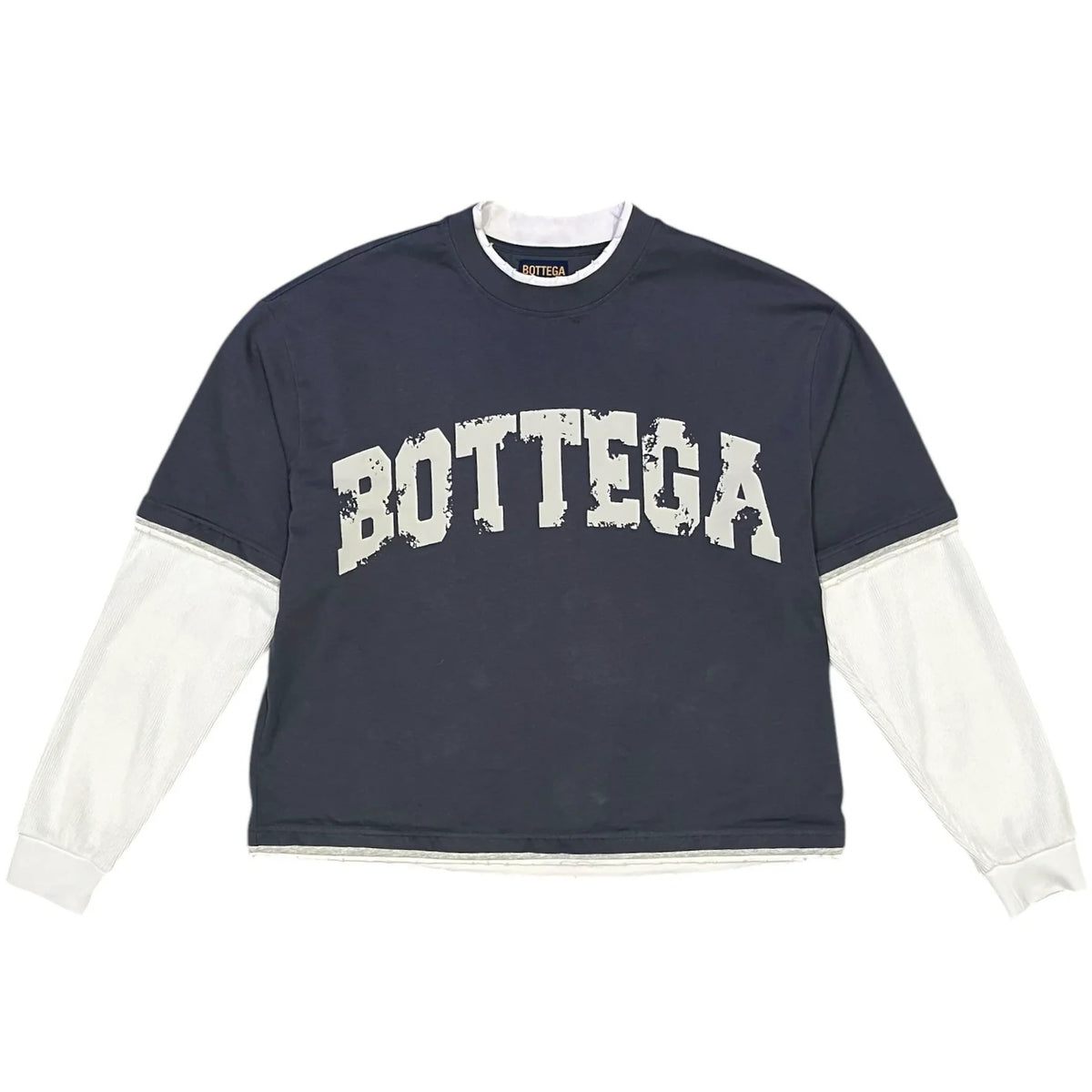
    In a contrasting move, Bottega Desires clothes go for the opposite approach. Print work, typographic elements, and striking color blocking take center stage across the hoodie and tee collections, following the visual grammar of streetwear brands that put a premium on immediate visual impact over nuance. A Bottega Desires hoodie commonly showcases printed graphics on the front or back, relaxed shoulder seams, and substantial fleece cotton — elements widely seen in the street-style segment rather than singular design feats. Operating on the same design thinking, the shorts and jorts collections bring loose-fitting silhouettes, distressed denim finishes on the jorts, and drawstring waistbands on the shorts — prioritizing casual comfort over refined tailoring.

    While Bottega Veneta spends years perfecting a one particular weave pattern, Bottega Desires uses a matter of weeks producing a novel graphic concept for the upcoming drop. There’s no wrong way between the two — they’re merely designed around distinct consumer expectations, the former grounded in heritage and endurance, the latter in speed and cultural relevance.

    How It’s Made and Constructed From

    Luxury leather goods from Bottega Veneta typically use full-grain calfskin, nappa leather, and in some cases exotic skins, all sourced through vetted Italian tanneries. Construction happens largely by hand, with the intrecciato weave alone taking hours per bag panel. This labor-intensive process is a major reason why Bottega Veneta bags often retail in the $2,000 to $6,000 range, depending on the style and material.

    Bottega Desires clothing uses more conventional streetwear materials: cotton fleece for hoodies, cotton-poly blends for shirts, and denim for the jorts line. Construction is factory-based rather than hand-finished, which keeps unit costs down and allows the brand to price items well below luxury thresholds — most pieces in the Bottega Desires clothes catalog sit in the double-digit dollar range rather than four figures. This is a completely different manufacturing model, and shoppers should not expect the hand-finishing or leather tanning process associated with the Italian house.

    In its own lane, though, Bottega Desires has earned a reputation for consistent stitching craftsmanship and pre-shrunk fabric on its shirt line — this based on repeated customer feedback across review platforms. The comparison doesn’t hinge on leather craftsmanship; rather, it’s centered on cotton fabric quality and print longevity, a benchmark that applies only within the streetwear category.

    Bottega Desires compared to Bottega Veneta: Side-by-Side Analysis

    Category Bottega Veneta The Bottega Desires line
    Origin date 1966, the city of Vicenza, Italy A present-day streetwear label
    Core Products Fine leather carryalls, footwear, finishing accessories Pullover hoodies, tops, casual shorts, denim shorts
    Aesthetic Direction A understated style rooted in woven-leather technique, free of branding Statement prints set against relaxed street-inspired silhouettes
    Materials Calfskin, soft nappa hide, specialty exotic hides Fleece cotton, cotton-poly blends, denim fabric
    Production Method Finished by hand in Italy Mass-manufactured streetwear production
    Standard Pricing $2,000–$6,000+ Budget-to-mid price positioning
    Launch Strategy Season-based show-driven collections Continuous digital release drops

    Choosing the Right Pick for Each Shopper

    If you’re looking for a leather piece worth investing in with decades of brand heritage underpinning it, Bottega Veneta stands as the benchmark — its bags hold resale value and its aesthetic codes have left their mark on the entire luxury accessories market. People buying in this space tend to want a lasting wardrobe staple, not a fashion-of-the-moment item.

    If you happen to be shopping for graphic hoodies, casual shirts, or denim shorts to keep in everyday circulation, Bottega Desires serves a completely different need. Its shorts and jorts are designed for layering up warm-weather streetwear looks, and its shirts double nicely as an under-jacket base layer once temperatures drop. Shoppers reading a Bottega Desires review before buying should judge the brand on its own streetwear merits — fit, print quality, fabric weight — rather than measuring it against Italian leather craftsmanship, because that comparison was never the brand’s intention.

    Search traffic tied to the naming overlap will likely persist into 2026, with more shoppers typing “bottega desires vs bottega veneta” to figure out which brand lines up with their aesthetic and price expectations. Recognizing that one brand is a high-end leather house while the other is a streetwear label makes the choice easy: choose according to category rather than name resemblance.

    Closing Thought

    Bottega Desires and Bottega Veneta sit in separate segments of the style landscape, and comparing them on craftsmanship alone misses the point. One made its mark on generations of leathercraft rooted in Italy; the other found its fanbase through easy-to-reach streetwear launches. Before they drop a hoodie, shirt, or pair of jorts into their basket, shoppers benefit from knowing what is Bottega Desires — a graphic-forward clothing brand, not a high-end leather goods maison.