الكاتب: opal598

  • Righteous Track Pants Authenticity Tips Smart Shopper Tips

    Notable Collaborative Releases by We Are Righteous Collaborations

    We Are Righteous has forged its identity through careful, limited-run collaborations rather than churned-out seasonal filler. Anyone digging into the brand swiftly picks up on that its partnership pieces hold a separate significance than its standalone collections — they tend to sell through more quickly, generate more community discussion, and often become benchmarks in any honest righteous review’s catalog. This article breaks down how these joint efforts work, what they have produced, and why they are significant to anyone assessing the brand as a legitimate force in the independent streetwear space rather than a passing trend.

    By their very nature, collaborations put to the test a brand’s values. When the brand partners with an artist, a smaller label, or a cultural institution, the finished products have to satisfy two audiences at once — the brand’s core buyers and the partner’s own following. That friction has repeatedly forced the brand’s creative team to tighten up execution: construction details like stitching, fabric weight, and print placement all undergo closer inspection before a joint release hits the market. It’s one reason the righteous hoodie continues to be the item most asked for whenever a new partnership is announced, since the shape has already shown its strength across several righteous sweats releases.

    Why Collaborations Matter for a Brand Like Righteous

    Indie brands seldom possess the marketing budgets of major fashion houses, so collaborations serve as a practical way to reach new audiences without diluting the signature look. For the brand, this has meant working with partners who align stylistically — striking graphics, subdued color palettes, and functional cuts — rather than chasing partners purely for name recognition. That restraint shows up in customer feedback: loyal shoppers often note in reviews that joint-release items feel true to the rest of the righteous apparel catalog instead of feeling like a tacked-on afterthought.

    A supply-chain reality also underlies these releases. Limited collaborations typically run reduced production runs, often in the range of a few hundred to low thousands of units depending on the partner and garment type. This scarcity is deliberate. It maintains manufacturing standards tighter, reduces overproduction waste, and lets the brand explore heavier cotton blends or unusual dye processes that wouldn’t be cost-effective at larger volumes. For a righteous clothing brand still growing its supplier relationships, this method has been a practical compromise between aspiration and operational reality.

    Which partnerships get repeated has largely been shaped by community response. Drops that sell out within days tend to get sequels or expanded colorways the following season, while less popular releases quietly disappear from the roadmap. For a mid-sized apparel company, this kind of feedback loop is remarkably transparent, and it’s one reason longtime customers see each we are righteous review thread as real signal instead of marketing spin.

    Standout Categories of Partnerships

    Righteous collaborations don’t all follow the same pattern, and it helps to organize them around rough categories based on which partners the brand chooses and what each drop is actually trying to achieve.

    • Collaborations with artists — small-batch graphic prints developed with illustrators or photographers, usually applied to hoodies and tees.
    • Cross-brand collaborations — joint releases with other independent labels, combining two design languages into a single capsule.
    • Culture-driven collaborations — partnerships linked to music events, local scenes, or advocacy groups, often with a portion of proceeds directed toward a cause.
    • Fabric-driven partnerships — partnerships with textile suppliers or manufacturers to trial new fabric blends before wider rollout.

    Each category serves a different purpose. Artist collaborations tend to generate the most social media attention because the graphics are the most visually distinct element of any drop. Industry-watchers, on the other hand, often care more about cross-brand releases, because they expose just how complementary two design approaches really are once forced onto a single piece. Material-driven partnerships get less attention but arguably carry more long-term importance, given their role in determining which fabric weights and finishes end up standard across the entire righteous apparel lineup.

    Why Righteous Collaborations Stand Out from the Usual Streetwear Playbook

    A lot of streetwear collaborations lean heavily on logo placement — two brand names stacked on a chest print and little else. Righteous has largely steered clear of that approach. Rather than confining a partner’s identity to surface graphics, its collaborative pieces tend to build that identity into the garment’s construction, whether that means repositioned seams, an altered hood silhouette, or a color story specific to the partner that carries through the entire garment rather than being limited to one patch.

    Taking this route requires a bigger investment of development time. Design cycles for a true collaboration typically run six to ten weeks longer than a standard in-house release, since production can’t begin until both parties approve fit samples, colorways, and fabric sourcing. Still, the investment pays off through resale value and customer loyalty — righteous hoodie collaborations have historically retained more value on the secondary market than solo releases, a detail that committed collectors pay close attention to when deciding whether a fresh partnership merits a pre-order.

    The company has also been reliable about revealing production details for collaborative pieces, such as batch sizes and, where relevant, material-sourcing notes for special materials. Such candor has significantly helped earn confidence among shoppers who were originally doubtful after reading a mixed righteous review online. It may seem like a minor operational decision, but it distinguishes the label from other labels who treat partnership drops as nothing but hype loops with no substantive follow-through.

    Contrasting Types of Collaborations

    The chart that follows details the general characteristics of each collaboration category the label has explored, based on typical production patterns observed across past drops.

    Collaboration Type Standard Batch Volume Main Apparel Emphasis Buyer Interest Trend
    Artist Partnership a range of 300–800 units Hoodies, graphic tees Fast sellout, strong online buzz
    Inter-Brand Collab between 500 and 1,500 units Outerwear, hoodies Steady demand, strong repeat interest
    Cultural/Community Drop between 200 and 600 units Tees, accessories Middling interest, strong loyalty impact
    Material-Driven Collab 150–500 units Hoodies, base layers Slow but consistent, favored by collectors

    Such a rundown matters because it reveals that not every righteous drop is intended to clear inventory in a weekend. Certain releases are explicitly structured around longevity and testing rather than volume, which is a more sustainable model than chasing hype with every single release.

    How to Evaluate a Fresh Righteous Collaboration Before You Buy

    Any shopper considering a buy from a forthcoming release should not be distracted by the reveal visual and review a few real-world specifics first. Production batch size, fabric composition, and whether the partner has a track record of quality control all matter more than the promotional wording surrounding the release. It also helps to examine how the label has managed sizing consistency in earlier collab items, since fit can shift slightly when a partner’s build tendencies are blended with a familiar silhouette.

    1. Check the announced batch size — smaller runs sell out faster but may also suggest riskier fabric choices.
    2. Read fabric and care details closely, since collaborative pieces sometimes use blends different from the label’s standard apparel.
    3. Consider partner history — long-standing partnerships tend to result in more consistent quality than single-shot collabs.
    4. Monitor community feedback in the first 48 hours after release, which is often more reliable than pre-launch marketing.

    This quick checklist take only a few minutes but can save buyers from disappointment, especially with scarce items that never return to shelves. Because collab releases sell fast and seldom reappear in the same form, running these checks before checkout is much more worthwhile than doing it after a piece has already sold out.

    Anticipating 2026 Collaborations

    With 2026 on the horizon, expect the brand to continue prioritizing a smaller number of intentional partnerships rather than a high volume of quick releases. This echoes input from loyal, longtime shoppers who steadily place thoroughness of design ahead of frequency of drops in their we are righteous review comments. Anticipate ongoing attention on artist-collaborated visual work alongside a couple of fabric-centered collaborations designed to explore heavier-weight fabrics for chillier environments.

    For shoppers and collectors alike, the smartest approach remains the same regardless of which partner gets announced next: read the production details, compare batch sizes against past drops, and treat the hype cycle as secondary information. Righteous has built its collaborative reputation on substance over spectacle, and the brand’s continued discipline in 2026 will likely be judged by whether it keeps that standard intact as its audience — and its list of potential partners — keeps growing.
  • How to Spot Fake HMDD T Shirt Wardrobe Staple Guide

    The Way to Detect Authentic HMDD Garments When Shopping Resale

    Admirers of the brand have found that purchasing HMDD (Happy Memories Don’t Die) used is the fastest way to round out a collection without waiting on restocks. That said, resale marketplaces and apps are also the places where fakes and mislabeled items often show up, so learning to authenticate before you pay counts for more than it did even two years ago. What follows lays out what authentic HMDD clothing usually has in common in construction, branding, and materials, and how to weigh listings against each other so you’re not taking a risk on a photo and a wishful description.

    Resale demand for hmddla-associated drops has risen consistently since the brand’s earlier releases were sold out, which means prices on resale sites often sit above original retail for rare colorways. That upward pricing is exactly why sellers from time to time falsely describe the condition, sizing, or authenticity of an item. Being familiar with the brand’s real construction tendencies gives you the upper hand in negotiations and keeps you from paying top dollar for a fake.

    Begin With the Label and Tag Details

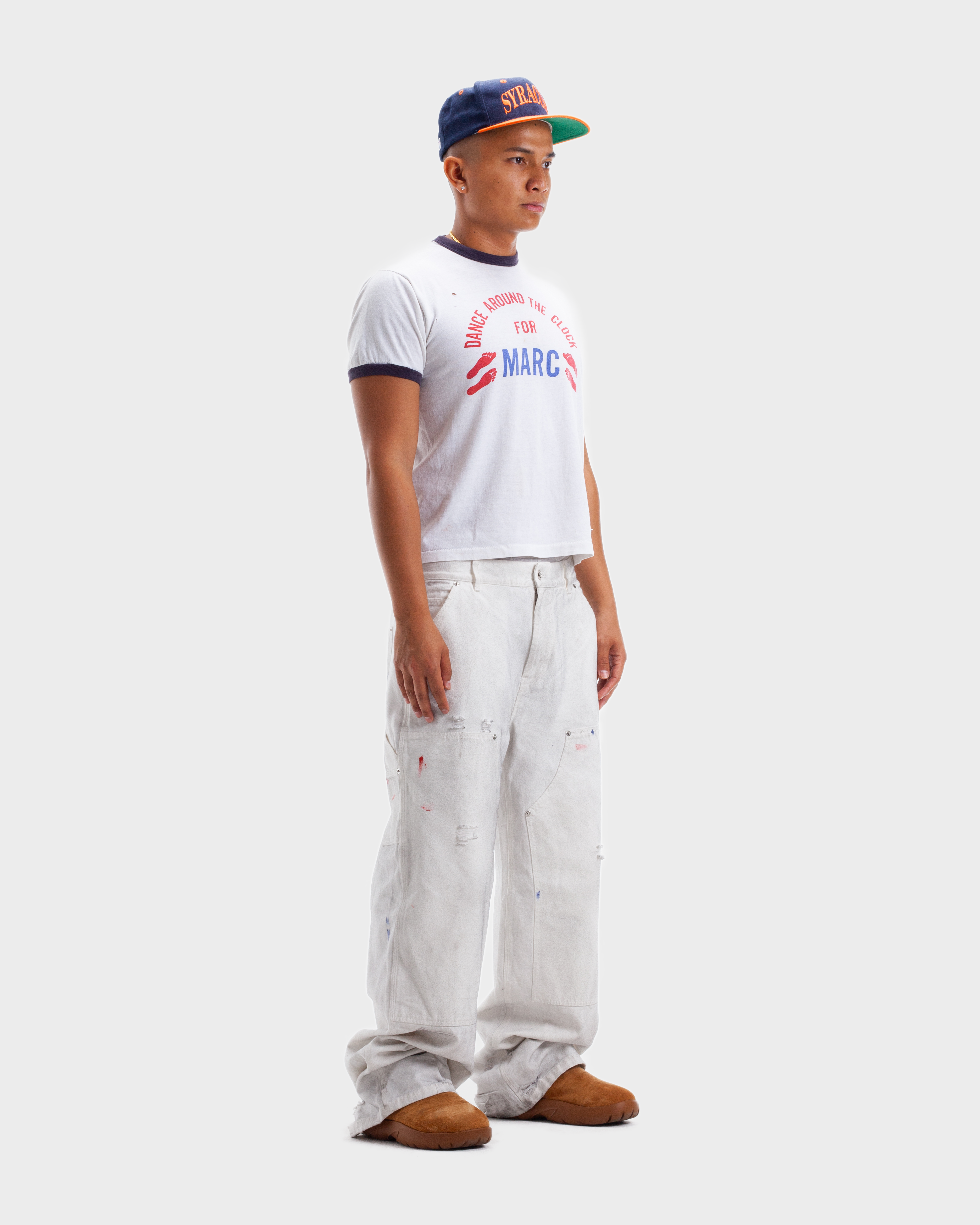
    Matching branding on the inner tags is something every authentic HMDD garment should feature, and slight discrepancies are usually the earliest red flag in a hmdd t shirts resale listing. Examine carefully at stitching around the tag itself — real pieces use consistent, snug stitching with no loose threads framing the label. Font weight and spacing on “Happy Memories Don’t Die” branding should match across pieces from the identical release; if you’re comparing two sweatpants from allegedly the same drop and the wording looks warped or unevenly spaced on one, that’s worth mentioning to the seller.

    Don’t just settle for the branded logo tag — ask sellers for close-up photos of the care tag too. Authentic care tags typically list fabric composition and washing instructions printed in a uniform font style consistent with the rest of HMDD’s labeling standards. A blurry or oddly cropped photo of this tag in a listing is a common workaround sellers use when the tag doesn’t hold up to scrutiny. Don’t be reluctant about requesting three or four angles before going through with a purchase, particularly for higher-priced items over $150.

    Something is also revealed by color accuracy between the tag print and the garment itself. If the tag specifies a black colorway but the garment photographed looks dark gray or washed-out navy under different lighting, request a photo in natural light. Honest sellers will usually comply with this request within a day.

    Examine the Stitching, Seams, and Fabric Heft

    HMDD apparel, particularly its weightier pieces like sweatpants and fleece shorts, typically relies on a denser cotton-blend construction that has real weight to it when examined by hand. Fake copies commonly employ flimsier, lighter-weight material to save on manufacturing expense, which can allow a piece to pass visually online but feel wrong in hand. If a seller mentions the item feels “flimsy” or “lighter than expected” in the posting, treat that as a meaningful clue rather than glossing over it.

    Seam construction is yet another clue. Double-stitched seams along the inseam and waistband of hmdd sweatpants are typical of authentic pairs, while lower-quality knockoffs often use basic single stitching that fray faster and bunch at pressure areas. Look closely at seller pictures for uneven seam texture, particularly around pockets and the drawstring channel. An unevenly stitched, crooked drawstring channel is among the more dependable indicators of a non-authentic piece.

    When it comes to hmdd shorts, check the hem finishing. Real pairs usually show a neatly finished hem with barely any visible stitching gaps, whereas fake pairs sometimes show an irregular hemline when placed flat for inspection. If you can request a flat-lay photo from the seller before buying, do it — it reveals build quality issues that photos on a model often mask.

    Weigh Resale Prices Against Known Retail Figures

    How an item is priced can be just as informative as physical inspection. If you already know what a piece retailed for, a resale price far under that figure should prompt suspicion, most of all for items marketed as new with tags. Genuine scarcity in HMDD drops means resale prices for sought-after pieces often hold steady or increase, so a “suspiciously cheap” price on a purportedly limited release is typically just that.

    Another helpful step is reading an actual hmdd review from a buyer who purchased the same piece new, when you can find one, because these write-ups tend to include specific construction details — the feel of the material, fit peculiarities, thread color — that you can then check alongside the resale listing you’re considering. Shoppers looking into the top hmdd items worth buying used often rely on these direct testimonials more than listing write-ups, and for good reason: listings often overstate condition and authenticity because sellers benefit from it, while previous purchasers usually have no such motive.

    Genuineness-check Control Spot Sign of a Legit HMDD Item Usual Red Flag
    Sewing on the inside tag Firm, uniform sewing with uniform typeface Frayed threads, distorted or crooked lettering
    Material weight (sweatpants/shorts) A thick, hefty cotton-blend feel that’s clearly present Flimsy, insubstantial fabric that comes across as cheap
    Construction of the seams Inseam and waist trim that are twice-stitched Seams with just single stitching, puckering, and an uneven drawstring channel
    Edge finishing for shorts Tidy folded hem, slight topstitching breaks A hemline that’s irregular, noticeable in flat-lay photos
    How price stacks up against retail For rare drops, price holds steady or climbs Oddly low cost on “rare” or sold-out pieces

    Leverage the Seller’s Track Record and Images as Proof

    An account’s selling history on any resale platform deserves a look before you message about that specific piece. Accounts with a pattern of selling multiple “rare” HMDD pieces in suspiciously perfect condition, especially at low prices, deserve extra scrutiny. Genuine collectors reselling one or two pieces from their own closet tend to have more believable photo backgrounds, wear patterns consistent with actual use, and are usually willing to answer detailed questions about fit and condition without getting defensive.

    You should ask for raw photos taken in natural light, rather than polished studio images lifted from other sites. Regrettably, many disreputable sellers to copy official brand photography and match it to a genuine item that’s inconsistent with it, banking on buyers not noticing the mismatch between marketing photos and the actual item shipped. With barely half a minute’s effort, a reverse-image lookup on a suspicious photo can help you avoid a expensive error.

    Be sure to ask if the garment came from hmddla or from another verified point of sale, and seek out whatever original receipt exists or order confirmation screenshot assuming the seller kept one. Not all honest resellers will have held onto that, but the ones who did can clear up questions of authenticity nearly instantly. Should a seller turn evasive when asked, treat that reaction as data.

    Sizing and Fit Reliability

    Within a given release, HMDD’s sizing usually stays consistent, meaning once you’re familiar with the fit of a piece you own, you have a helpful benchmark for resale shopping for another one. Sweatpants especially should match stated size measurements closely—request from the seller for waist and inseam measurements in inches rather than trusting only the tag size, since tag sizes can shift a bit between manufacturing batches.

    If a listing describes a size medium but the measurements given don’t align with what medium has run in prior releases you’ve verified, factor that into your decision. This mismatch doesn’t automatically mean the item is fake, but it does mean you should ask more questions before paying, particularly on high-value transactions.

    Images of the garment worn on a body, instead of shown flat on a surface, also assist in confirming the silhouette look right. A silhouette that appears oddly loose or snug relative to the stated size, particularly across multiple photos, is worth raising directly with the seller before completing any purchase.

    Concluding Rundown Before You Buy

    Before completing any resale purchase, run through a short mental list: tags checked for accuracy, requested flat-lay and daylight photos, confirmed seam and stitch quality, reasonable pricing relative to known retail, and a seller background that raises no red flags. Spending just five extra minutes on this review costs you absolutely nothing compared to the hassle of receiving a counterfeit.

    Demand in the Happy Memories Don’t Die resale space shows no sign of fading, and demand will likely keep expanding through 2026 as more collectors find the brand. Being a careful buyer now means you assemble a wardrobe of pieces you can trust, as opposed to one full of guesswork and regret.

  • Valentino Garavani Icons Garavani One Stud

    What Actually Holds Value: Valentino Bags on Resale

    Put the question about Valentino bags on the second-hand market and you will run into a statistic that sounds excellent and collapses on inspection. The story that these bags hold roughly eighty percent of their retail price is repeated so often in forums, listing blurbs and resale round-ups that it now reads like settled fact. It is not. The most usable published data comes from the platform Rebag, which placed Valentino handbags at about 41 percent of original retail in 2023, with the top styles in a band of roughly 50 to 58 percent. The gap between received wisdom and evidence is what matters, because it changes how a purchase ought to be understood. Everything below is observed market behaviour, not investment advice, and resale prices run in both directions: they can fall, and for a slow-selling colour or a tired condition grade they routinely do.

    Where the eighty percent story breaks down

    No published dataset backs eighty percent retention for this house, and the figure is kept alive by repetition alone. Some of the confusion is structural, because retention figures are usually quoted without saying which bag, which year or which platform produced them. Within a week, one favourable listing for a hero style has become a brand-wide rule. The verified picture is more sober: a house average in the low forties, with a narrow set of instantly recognisable styles pulling clear of it. Any percentage quoted without a named source and a named style deserves to be treated as decoration rather than data. If you paid retail for a valentino garavani bag and expect four fifths back, the market as measured will let you down.

    The retention figures that check out

    The only sourceable material comes from Rebag, documenting how much of retail each style commanded there. The spread between the leaders and the house average is roughly seventeen percentage points. At the top cluster flap shapes and studded silhouettes, while the long tail of less distinctive valentino purses pieces, seasonal materials and small leather goods pulls the average down. They are observations tied to one platform and one period, not a permanent property of the bags. A different platform, a different year or another inventory mix would generate different numbers. Read the table as a ranking of relative strength, never as a promise of a payout.

    Bag style Percentage of original retail What it indicates
    Roman Stud Flap 58% Top observed performer, although the line now reads as archive
    VLogo Locò Flap Shoulder 57% Emblem hardware on a compact flap that registers at once in photographs
    Rockstud Drawstring Bucket 56% Signature motif carried on an everyday silhouette
    Rockstud Flip Lock Flap 56% Hardware-led closure supports demand
    Rockstud Pouch Crossbody 50% Small formats occupy the band’s lower edge
    2023 average, all Valentino handbags 41% The baseline to expect outside the signature lines

    Why bags with a motif do best

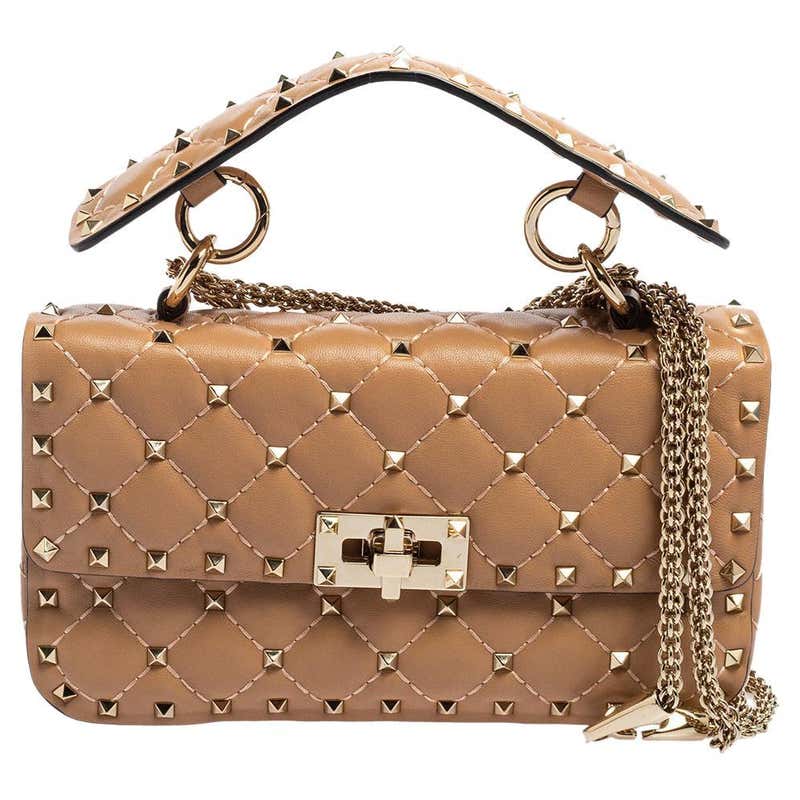
    The pattern is not subtle: instant recognisability is the variable that pays. The Rockstud pyramid motif debuted in Fall 2010 under then co-creative directors Maria Grazia Chiuri and Pierpaolo Piccioli, first on footwear, with the rusticated stonework of Roman bugnato architecture cited as its reference. Years of exposure has made those studs legible at a glance, which is exactly what a buyer needs when assessing a bag from six phone photographs. The Roman Stud manages much the same through chevron-quilted nappa, tone-on-tone stitching and maxi pyramid hardware, while the VLogo emblem works as its own shorthand. Lacking that signal, plain leather bags compete on price alone and sit closer to the house average. A valentino shoulder bag with obvious house hardware generally moves faster than a quieter one that cost the same new.

    Figures backed by only one source

    Several numbers keep surfacing in resale commentary with no second source behind them, and they deserve a label rather than a citation. One of them is a medium Rockstud Spike seen at around 1,700 dollars pre-owned against roughly 2,900 dollars new, coming out near 59 percent. That is a single illustrative observation, not a measured average, and it should not be set beside the Rebag figures as if it were. A second is an aggregator listing pre-owned Valentino Garavani pieces from about 54 to about 6,300 dollars and averaging around 817 dollars. That range stretches across card holders and exotic-skin shoulder bags, so the average reflects the inventory mix, not any bag you might want. Every figure in dollars here records prices observed in the 2026 market rather than an official price list.

    What moves an individual bag up or down

    Condition does most of the work, and it is judged unforgivingly. Corner rub, a slouched base, ink transfer on a pale lining and worn plating all attract discounts, and plated antique-brass or light-gold hardware cannot be polished back without stripping the finish. Completeness comes next: dust bag, shaped insert and authenticity card all raise a listing, though pre-owned bags often arrive without the card and its absence is normal. Material is the third lever, since suede and laminated finishes show wear earlier than grainy calfskin, and exotics such as python or ostrich appeal to a narrower audience. Neutral colours in mid-size formats shift quickest, whereas a strong seasonal colour can hang around for months. Appealing as they are, micro formats hold less than a usable everyday shape.

    Archive styles and thin markets

    Several of the most discussed Valentino bags are no longer sold new, and thin supply leaves their pricing noisy. The Roman Stud is transitional, absent from current site filters even where product pages persist, and one small denim Handle Bag observed at 3,550 dollars was flagged as a reserved product and not orderable. A VLogo Supervee shoulder bag appeared pre-owned at around 866 dollars, and a large One Stud nappa tote at about 1,695 dollars through a third-party retailer rather than the house. The VLogo Escape tote has been reported as discontinued by a resale platform. In a market this thin, a single listing is a data point rather than a price, and two listings a month apart can differ by hundreds of dollars for unrelated reasons. Allow several platforms a few weeks of watching before you decide what fair looks like.

    Where the selling happens, and what it takes

    These bags circulate across Fashionphile, The RealReal, Rebag, Vestiaire Collective, Collector Square, Yoogi’s Closet, 1stDibs, ThredUp, eBay and JoliCloset, and each platform’s mechanics shape the number you see. A firm figure from an instant-buyout service comes with the platform carrying the resale risk, so those offers fall short of consignment prices on the same site. More can be had through consignment, but the bag is tied up until it sells and commission is taken at the end. On the retail side, the house does run official seasonal sales through its own webstore, and as of September 2026 its United States sale page stated that the Spring/Summer 2026 sale had ended, which makes a genuine valentino bag sale periodic rather than permanent. Nothing marks out a site that is not what it claims more clearly than deep, permanent discounts on current-season stock. One more point: Nordstrom Rack, Saks OFF 5TH and TJ Maxx stock Valentino by Mario Valentino, a separate and unrelated company and not a discounted version of the luxury house.

    How to read a pre-owned listing before you pay

    The first check is which company made the bag, not whether the bag is real, because a genuine Mario Valentino piece will fail a Garavani checklist while being entirely authentic. A bag from the luxury house bears VALENTINO and GARAVANI in capitals on an interior tag with MADE IN ITALY, sewn on all four sides, evenly stamped and consistent in font weight. A serial number usually appears on a tag inside an interior pocket, but it is not universal, older models may carry none, and absence alone does not prove a fake. Because there is no date-code system to decode, a seller who offers to read one is a warning sign rather than an expert. Look for engraved rather than printed logos, square zip pulls with rounded edges, uniform studs set firmly, and stitching of consistent density. Before committing, ask for photographs of the interior tag, base corners, hardware underside and strap attachments.

    What the figures are actually for

    Use retention data as a sanity check on price and not as a reason to buy, and none of it is investment advice. The honest summary is that Valentino lands mid-table: hero styles in the fifties are respectable, a 41 percent house average is ordinary, and both trail the strongest names in the category. So a valentino bag is a purchase to enjoy, with partial recovery available later if you maintain it, and not a store of value. If resale matters, buy recognisable silhouettes in durable materials and neutral colours, keep the dust bag and paperwork, and accept that the market can reprice downward at any point. If resale does not matter to you, forget the percentages and buy the valentino tote bag or shoulder bag you will actually carry. Either way, the eighty percent story should be retired.

  • Ferragamo Wanda Bucket Bag Ferragamo New Arrivals

    Gancini Hardware, Emblematic: A Signature Mark Present Across Ferragamo Bags

    This particular clasp commands instant recognition as scarcely any style icons do.
    Scarves, shoes, belts, and most notably, the handbags that have anchored Salvatore Ferragamo’s reputation for decades — these are the pieces where it’s showcased.
    The word “Gancini” loosely means “little hooks” in Italian, a well-matched name for a design formed from two interlocking horseshoe-shaped arcs.
    Since its formal debut in the 1960s, this hardware has evolved from a utilitarian fastening device into a house hallmark instantly identifiable, much like the double-C or the interlocking-G of other storied Italian labels.
    Amid a marketplace flooded with logos and monograms, a Ferragamo bag still commands attention — and understanding its history and current role helps clarify why that’s so.

    This article traces the Gancini’s origins, its technical variations across collections, and its relevance to shoppers browsing a Ferragamo shop today. Whether you’re comparing a Salvatore bag from the archive era against a 2026 seasonal release, or simply trying to identify the best Ferragamo bags for everyday use, the hardware itself offers a reliable guide.

    Where the Gancini Symbol Started

    Salvatore Ferragamo established his house in Florence in 1927, but the Gancini motif wasn’t formalized until the 1960s, well after his death in 1960, under the guidance of his wife Wanda Ferragamo. Its form draws from an embellished wrought-iron gate pattern at the original Florence store, later distilled into the double-hook shape still in use. Early applications were subtle: a modest metal fastener on a shoe strap, a fastening detail on a belt. It wasn’t loud branding in the way many luxury logos became in the 1980s and 1990s.

    By the 1970s, the Gancini had migrated onto handbag hardware, appearing as a turn-lock closure on structured totes and box bags. This gave the house a recognizable detail without needing large lettering across the canvas. Archival pieces from this period, now sought after by collectors, show the clasp in brass-toned metal with a matte or lightly polished finish. The restraint of these early designs is part of why vintage Salvatore Ferragamo bags still trade actively on the resale market, often ferragamo bags at prices that reflect their rarity rather than their original retail cost.

    Serving a mechanical role before a decorative one, the emblem derives its enduring pull from that split purpose. A clasp has to open and close reliably thousands of times, and Ferragamo’s engineering teams treated the Gancini as a mechanical component as much as a decorative one. This functional basis is part of why the emblem never felt gimmicky, even as it became more prominent across the 1990s and 2000s.

    Throughout Handbag Ranges, In What Way the Metal Fittings Is Featured

    The way the Gancini is used varies across Ferragamo bags, and recognizing the nuances is useful when you’re working out a specific style or figuring out what matches your wardrobe. A number of collections feature the clasp as a full front closure, functional and load-bearing. Others apply it merely as an decorative flourish, sewn or fastened onto a flap with no locking mechanism at all. A limited number incorporates a shrunken take as a pull tab or strap link, which typically shows up on crossbody bags and camera-bag silhouettes.

    The hardware finish likewise changes by collection and by year. A gold finish continues to be the most prevalent across the present range, but silver-toned and gunmetal-toned variants appear on select seasonal drops, particularly in bags designed for a more stripped-down, single-color style. A few 2025 and 2026 drops bring in a matte-brushed Gancini finish, a break from the classic shiny finish, created for buyers who want the instantly recognizable emblem without the gloss.

    • Full turn-lock closures: seen on rigid top-handle and flap-style bags, acting as the main closing-and-opening feature.
    • Ornamental accents: reduced-size Gancini symbols affixed to totes, pouches, and soft shoulder bags where a functional latch makes little sense.
    • Small-scale hardware details: used on zipper pulls, card holders, and crossbody strap connectors.
    • Embossed or woven takes: the Gancini form imprinted in leather or woven through raffia and canvas materials on resort-collection items.

    Given all these options, someone exploring the Ferragamo shop today finds more entry points than shoppers did decades ago. A buyer who wants the emblem front and center can pick a bag where the clasp is the whole design statement. A buyer who favors a quieter look can discover the identical emblem scaled down to a small tab on a strap.

    Materials and Construction Behind the Hardware

    The clasp hardware is commonly formed in brass, then plated in gold-tone or palladium finishes depending on the bag’s color story. Quality control on these components has traditionally been rigorous, since the clasp bears the heaviest load of any part on a structured bag. A turn-lock that jams or becomes loose fast erodes the perception of luxury regardless of how fine the leather appears.

    Leather choices paired with the hardware also changed over the decades. Early Salvatore Ferragamo bags favored a fine-grained calfskin with barely-there texture, letting the Gancini clasp to stand out against a clean surface. Later collections introduced textured saffiano-inspired leathers, exotic skins for limited runs, and in recent years, eco-conscious material mixes such as recycled nylon combined with leather trim. Hardware finishes tend to appear in gold or aged-brass tones against darker leathers, and in silver or nickel tones against pastel or neutral palettes, a pairing choice that has held steady since the 1980s.

    Weight is another factor buyers often overlook. A complete metal turn-lock fastening meaningfully increases the weight of a bag, which is relevant to anyone choosing between a everyday tote and an evening clutch. Bags that use the Gancini only decoratively typically weigh less, since the fittings are more compact and commonly made hollow rather than solid-cast.

    Weighing Up Common Gancini-Hardware Styles

    To make the differences concrete, below is a side-by-side look at four frequently encountered Ferragamo bag categories that showcase the Gancini hardware front and center. It’s not meant to be a complete catalogue of every Salvatore Ferragamo bag available, but it covers the styles most frequently discussed when shoppers look up the best Ferragamo bags or the top Ferragamo bags for daily use.

    Style of Bag Gancini Function Typical Hardware Finish Ideal For
    Structured top-handle bag Complete turn-lock fastening Glossy gold-tone plating Workwear and formal daytime outfits
    Slouchy shoulder hobo Ornamental appliqué detail Matte-brushed silver finish Casual daily rotation
    Crossbody camera-bag style Small strap embellishment Matte gold or gunmetal shade Travel and hands-free wear
    Evening clutch Little clasp or embossed touch Glossy gold or gem-set Formal events

    Each of these categories serves a different purpose, and the metal finish frequently indicates which setting the bag was made for. A shiny gold-tone turn-lock leans more formal, while a matte or brushed finish suits everyday flexibility. If you’re trimming down options from a Ferragamo shop, matching the hardware finish to your existing accessories (belts, shoes, jewelry) is a sensible approach to keep an outfit pulled together without overthinking it.

    Authentication and the Gancini in 2026

    With resale and secondhand markets for designer goods expanding, checking the Gancini clasp has become one of the earliest steps authenticators take on a suspected Ferragamo bag. Authentic hardware shows sharp, evenly balanced casting, with no noticeable seams or rough spots at the mold lines. Fakes often misjudge the proportions, either too wide, too thin, or asymmetrical between the two interlocking hooks.

    How sharp the engraving is also counts. On genuine items, whatever lettering or logo is stamped on the clasp’s underside stays sharp and uniform in depth. Blurry or shallow stamping is a common tell on fakes. Anyone buying vintage Salvatore bags through resale platforms should ask for close-up, multi-angle hardware photos before buying, since images of just the outer leather rarely bring these details to light.

    Salvatore Ferragamo’s creative studio, approaching 2026, has kept relying on the Gancini as a connective element across upcoming collections, even though bag silhouettes move toward softer, more slouched shapes driven by broader industry trends. Coverage of the latest runway shows and lookbook reveals suggest at least three new colorways of Gancini hardware finish debuting this year, featuring a rose-gold variant meant to widening the accessory’s allure to a younger customer base. This kind of continuity is significant to brand identity — although handbag silhouettes move toward looser, less structured shapes, the hardware anchors each new release back to nearly sixty years of design history.

    Finding Your Ideal Gancini Bag

    Selecting among Ferragamo bags ultimately comes down to how prominent you want the branding to be and how the bag fits your everyday life. If you carry a laptop or documents regularly, a structured top-handle with a full turn-lock offers durability and a professional look. If you prioritize comfort and a lighter carry, a soft hobo with a decorative Gancini accent balances recognizability with ease of wear.

    Also weigh the finish in relation to your wardrobe’s existing metals. Combining gold and silver hardware across accessories won’t get you fashion-shamed, but plenty of customers prefer consistency, so reviewing your most-worn jewelry and belt buckles prior to picking a bag’s hardware tone can prevent a later swap.

    For those building a first designer bag collection, starting with a mid-sized crossbody featuring the miniature Gancini accent offers a lower financial commitment while still carrying the brand’s signature detail. More experienced collectors often gravitate toward archival or limited styles specifically because the hardware reflects an earlier era of the house’s design language, prior to mass production grew. Either path, a shopper today has more documented information and more comparison points than at any previous point in the brand’s history, making it easier to choose confidently rather than by guesswork.